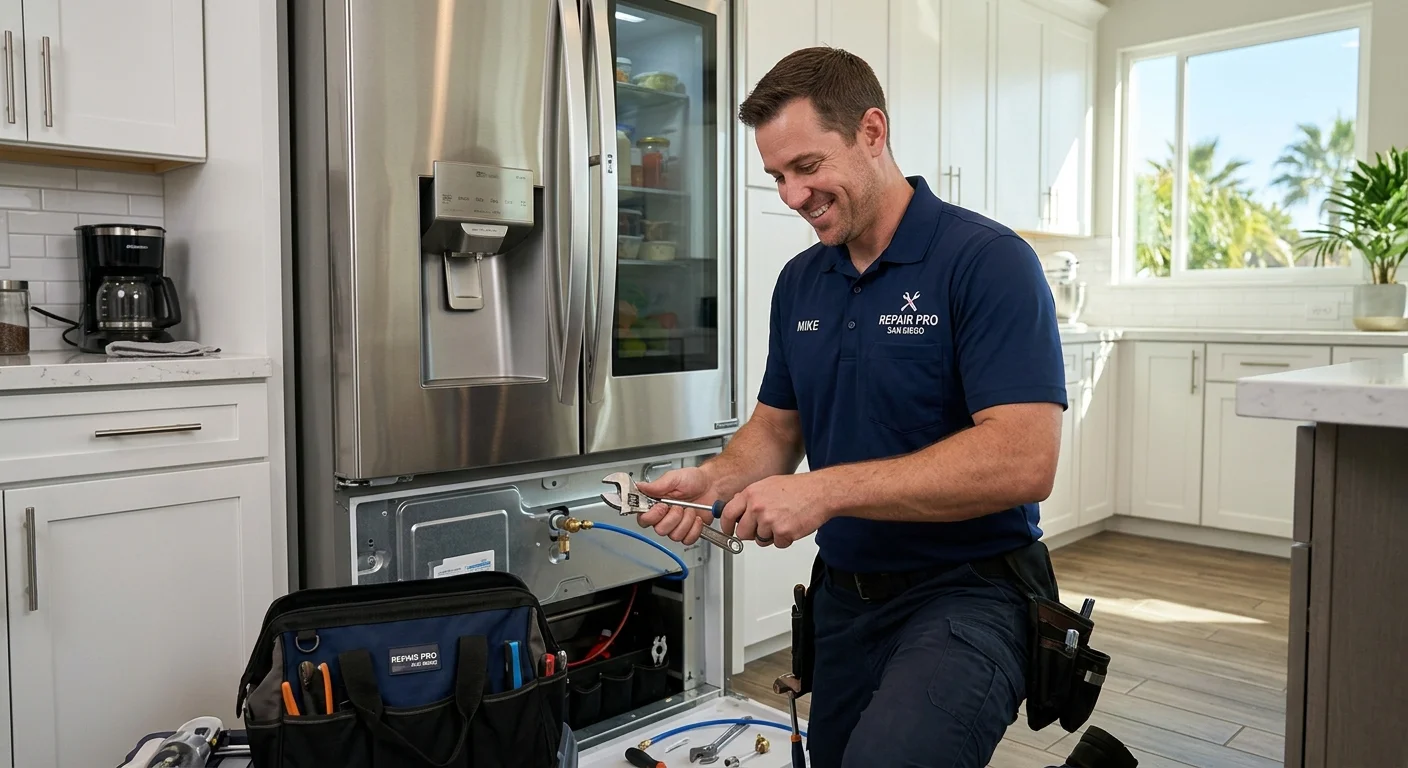
A fridge that quits puts food on a clock. FDA guidance holds perishables: discard after 2 hours above 40°F (1 hour if ambient is above 90°F). Repair Pro San Diego matches independent technicians. We do not flag priority intake or employ in-house techs.
We match you with refrigerator repair technicians across San Diego County. Sealed-system refrigerant work belongs to an EPA Section 608 certified technician. We do not promise a first-visit finish or all-brand capability.
Is your San Diego refrigerator not cooling?
A warm fridge usually traces back to one of a few culprits. A dead evaporator fan is one possible cause: it pushes cold air from the freezer into the fresh-food section. When that fan fails, the freezer stays cold but the fridge climbs to room temp. Next is the defrost system. A failed defrost heater or defrost thermostat lets frost cake the evaporator coil until air can’t move. You’ll see heavy ice on the back wall of the freezer. The third is the sealed system, meaning a leaking refrigerant line or a compressor that won’t start. That one runs constantly and never gets cold.
Out here, a clogged condenser coil is a big one too. Coastal salt air in places like La Jolla and Pacific Beach corrodes the coil fins and packs them with grit. The compressor overheats and shuts down on its thermal overload. East County garage fridges in El Cajon and Santee take the worst of it, since triple-digit summer heat pushes a tired compressor past its limit. The technician pulls the coil, cleans it, and checks the start relay and capacitor while they’re back there. If you want to rule out the simple stuff first, our fridge not cooling checklist walks through the door seal, the vents, and the temp settings before you call.
Common refrigerator problems our network sees every day
A few faults come up again and again on service calls across the network. An ice maker that stops making ice usually points to a frozen fill tube, a failed water inlet valve, or a bad ice maker module. Hard water inland in places like Poway and Escondido scales up the inlet valve and chokes the flow. Buzzing or clicking near the bottom of the fridge is often the start relay clicking on a compressor that won’t turn over. A loud grinding usually means a worn evaporator or condenser fan motor bearing.
Leaks have their own short list. A puddle inside the fridge or under the crisper means a clogged defrost drain, which the technician clears and flushes. Water on the floor points to a cracked drain pan or a leaking water line behind the unit. A door seal that’s gone stiff or torn lets humid air in, which makes the fridge run longer and frost up faster. Techs test seals with a dollar-bill drag and replace the gasket if it slips, using a meter and a clamp ammeter to read amp draw and pin the fault instead of guessing. See our full fridge repair in San Diego coverage for what a visit includes. If you’re chasing a leak, our post on a refrigerator leaking water breaks down where to look.
Refrigerator brands local techs repair in San Diego County
- Samsung: Ice in the fresh-food section is a symptom to record. It is not a 22-degree icing fact. The technician confirms the fault.
- LG: Linear-compressor history belongs in the 2020 settlement facts (not a recall; claims window closed). Codes still need the model chart.
- Whirlpool / Maytag / KitchenAid: Shared platforms are a parts question, not a stocked-parts promise.
- GE: Valve and board faults are diagnoses, not a carried-parts list.
What’s our refrigerator repair process?
Here’s how a fridge call runs from your first phone call to a cold box.
- Initial Contact & Scheduling: You tell us the brand, the model, and the symptom. The more you can describe, like whether the freezer’s still cold or you hear clicking, the better prepared the matched technician will be for your visit.
- On-Site Diagnosis: The independent provider sets the arrival window. Repair Pro San Diego is voicemail matching, not dispatch. They read temps at the fresh-food and freezer sections, check amp draw on the compressor, test the fans and defrost circuit, and pull the model number to match parts.
- Written quote: The tech tells you the exact part that failed and what it takes to fix it. You get a written quote for parts and labor before any work starts.
- Expert Repair: Once you approve, the tech does the work. For a sealed-system job the tech recovers the refrigerant, replaces the part, pulls a vacuum, and recharges to spec. For a fan or board, it’s a direct swap and retest.
- Testing & Cleanup: The tech runs the fridge through a cooling cycle and confirms it pulls down to temp before leaving, vacuuming the coil and clearing their tools out of your kitchen.
Leave brand, model, and which compartment is warm in the voicemail. The matched technician diagnoses and quotes in writing. Sealed-system work is EPA 608. There is no 12-year or half-replacement rule.
For a fridge dumping food, use the emergency appliance repair referral path. Timing is the provider’s, not a priority flag we control.
How much does refrigerator repair cost in San Diego?
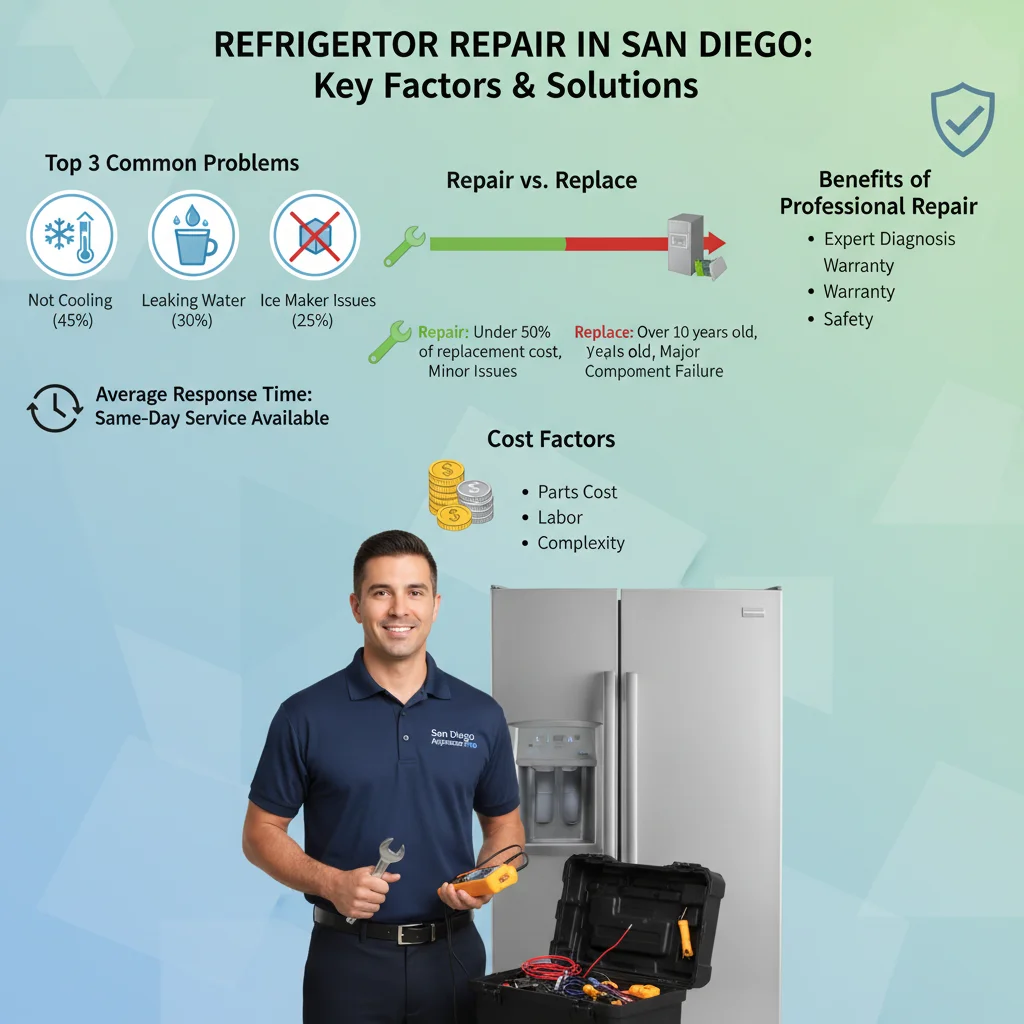
Nobody can quote a fridge repair sight unseen, since the price rides on which part failed. But a few factors set where you land:
- Type of Repair: Minor issues like a faulty thermostat or a clogged drain generally cost less than major component replacements.
- Part Replacement: The cost of replacement parts varies significantly. A new fan motor is less expensive than a compressor or a main control board. The brand of your refrigerator can also impact part costs. For example, specialized parts for a high-end Sub-Zero unit might be more costly than those for a standard Whirlpool fridge.
- Labor: Technician labor rates vary based on the complexity and time required for the repair, and reflect the technician’s own experience and training.
Ask the technician about their diagnostic fee and whether it’s credited toward the repair. You get a written quote before any work starts, so the number doesn’t change at the end. On older units, techs will tell you straight if a fix costs more than the fridge is worth. A compressor on a ten-year-old box is often a tougher call than on a three-year-old one. For the math on that specific repair, read our breakdown of refrigerator compressor repair cost in San Diego.
Why choose us for your fridge repair
We connect homeowners with local techs across San Diego County every day, so we know what this climate does to a fridge. Salt air eats condenser coils near the coast. Triple-digit East County heat cooks garage compressors. Hard water inland scales up inlet valves. Techs diagnose with that in mind instead of swapping parts until something works.
The technicians in our network read sealed systems, evaporator and condenser fans, defrost circuits, and control boards, so they can diagnose an older top-freezer or a new smart French-door. Ask whether the matched technician services your exact model. Outcome is not guaranteed. Warranty terms come from the tech who does the work, so ask before you approve the quote. The technician quotes before any work starts, and the price you approve is the price you pay. When you need refrigerator repair in San Diego, call a network that diagnoses before it replaces.
Frequently asked questions
How quickly can I get refrigerator repair in San Diego?
Leave a voicemail with brand, model, and symptom. We do not flag priority intake or load parts onto a truck. FDA holding: discard perishables after 2 hours above 40°F (1 hour above 90°F ambient). The matched technician sets timing.
What are the most common refrigerator problems in San Diego?
Coastal homes deal with condenser coil corrosion from salt air, which overheats the compressor. Inland areas like El Cajon and Santee see compressor failures from triple-digit summer heat. Hard water in Poway and Escondido scales up water inlet valves. Across the county, possible inspection points include a dead evaporator fan, a frosted-over defrost coil, ice maker failures, and clogged defrost drains. Those are not ranked call statistics.
Is the diagnostic fee credited toward the repair?
Ask the technician about their diagnostic fee and whether it’s credited toward the repair before you book. You get a written quote before any work starts, and the price you approve is the price you pay.
Is it worth repairing a 10-year-old refrigerator?
Compare the written quote with a real replacement. There is no approved 12-year cutoff or 50% rule. Sealed-system work is EPA 608.
When to call us
When your refrigerator shows any signs of trouble (whether it’s not cooling, leaking, making unusual noises, or struggling to make ice) it’s usually best to call a professional repair service. Timely intervention can prevent minor issues from becoming major, more costly repairs, or even total appliance failure. Call us at (858) 988-7787 to get matched with a technician.