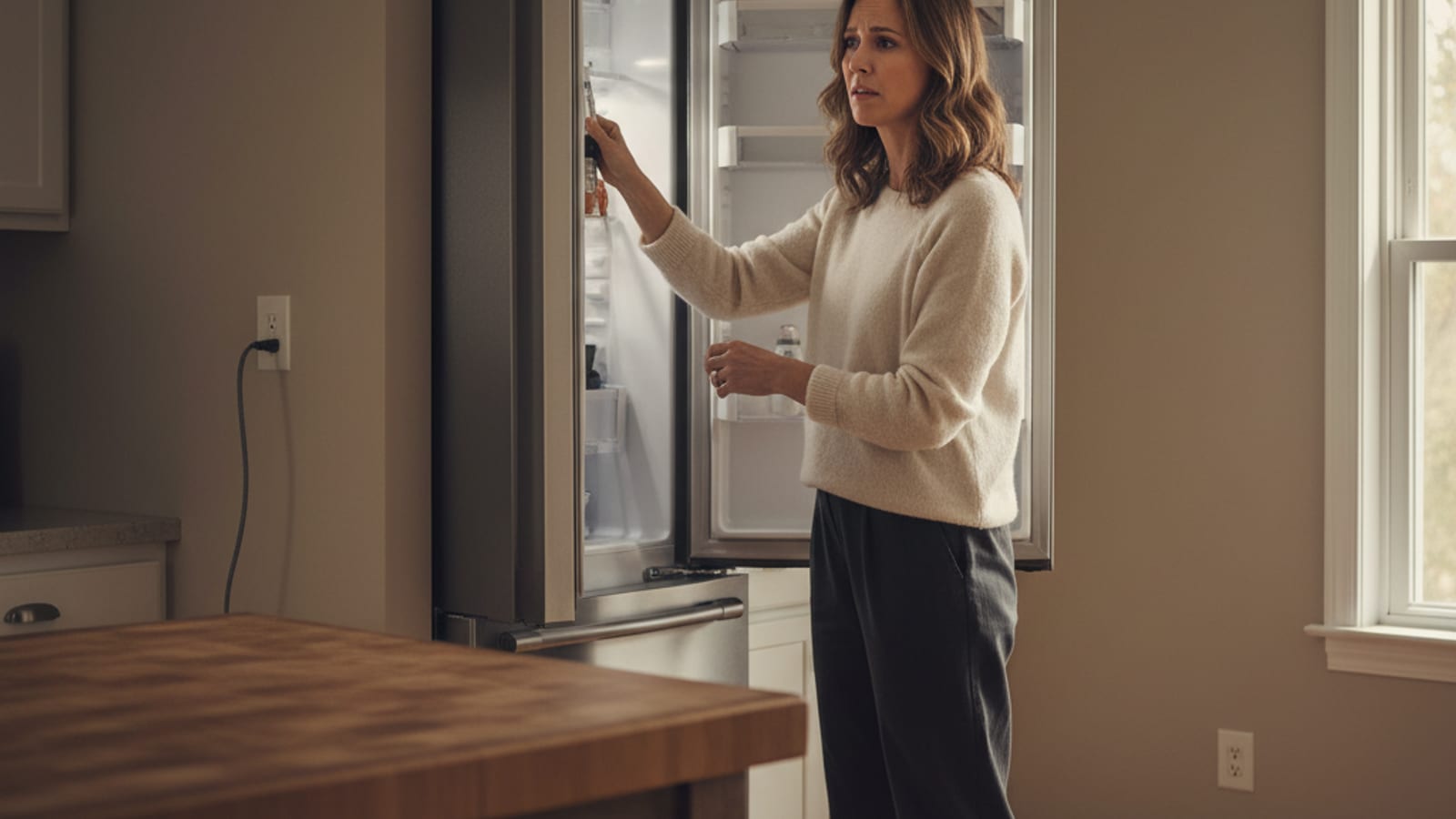
A warm fridge with food inside is an emergency. Before you call a repair technician, run through this checklist, about half the calls we get end up being something a homeowner can confirm or rule out in ten minutes. That can save you a diagnostic fee and get your fridge cooling faster.
1. Check the temperature dials
It sounds silly, but it’s the #1 cause of “my fridge stopped cooling.” Kids, grandkids, someone cleaning the fridge, somebody bumped the dial. Fresh food compartment should be at 37°F; freezer at 0°F. If the dials are at the warmest setting, you’ve found your problem.
2. Is the fridge actually running?
Put your ear to the side of the fridge. You should hear a low hum (the compressor) and possibly a quieter whir (the evaporator fan in the freezer). If you hear nothing:
- Check that the fridge is plugged in.
- Check the outlet by plugging something else in (a lamp works).
- Check the breaker in your main panel labeled “kitchen” or “refrigerator.”
No power means something upstream failed. Power means the fridge failed. Either way, the troubleshooting path diverges from here.
3. Feel the back (or bottom) of the fridge
Pull the fridge out 6 inches and reach behind it, or look underneath with a flashlight. The condenser coils are either at the back (older fridges) or the bottom rear (most modern fridges). They should feel warm when the compressor is running, that’s normal. If they feel blistering hot or if the compressor is cycling on and off every 30 seconds, the compressor is struggling.
4. Clean the condenser coils
If the coils are covered in dust and pet hair, this is often the entire problem. A dust-blanketed coil can’t shed heat, the compressor works overtime, and the fridge can’t reach set temperature. Unplug the fridge, remove the kickplate grille, and brush the coils clean with an inexpensive long-handled coil brush from a hardware store. Vacuum the loose debris, replace the grille, plug it back in.
Wait 24 hours before judging whether it worked.
5. Check the door seals
Run a dollar bill around the perimeter of the door seal, closing the door on it. Pull it out. If the bill slides out easily, the seal isn’t gripping, cold air is leaking, the compressor runs non-stop, and nothing inside reaches temperature.
Seal replacement is one of the simpler, less expensive refrigerator repairs on this list.
6. Check the fresh-food vent
Fresh food in a freezer-on-top or bottom-freezer fridge gets its cold air from the freezer through a small vent at the back. If food is stacked against that vent, cold air can’t circulate, the freezer stays cold (because cold stays put) but the fridge section warms up.
Rearrange food so nothing blocks the vent. Give it 12 hours to recover.
7. Listen for the evaporator fan
Open the freezer door and listen. You should hear a soft whirring fan. If you don’t hear anything but the compressor is running, the evaporator fan has probably failed, and this is the single most common cause of “fridge warm, freezer cold.”
Evaporator fan replacement costs more than a simple parts swap, since the fan sits behind the interior panel and takes more labor to reach. Not DIY-friendly unless you’re comfortable with electrical work and partial disassembly.
8. Check for excessive frost in the freezer
If the back wall of the freezer has a thick layer of frost, the automatic defrost system has failed. Normal defrost cycles happen every 8-12 hours and melt off frost buildup. When defrost fails, frost blocks airflow, the evaporator ices over, and nothing cools properly.
This is a defrost thermostat, defrost heater, or timer/control board issue. It’s a moderate repair, the part itself is inexpensive but pinpointing which component actually failed takes diagnostic time. For the full breakdown of what causes a freezer frosting or icing up, including the door-seal and defrost checks, see our dedicated guide.
9. Check the ice maker and water dispenser
Turn off the ice maker if nothing else has worked. Sometimes a frozen fill tube or a stuck water valve causes a cascade of problems, the valve leaks, water pools, the defrost drain freezes, cooling suffers.
If turning off the ice maker helps over 24 hours, you’ve isolated the problem.
10. How old is the fridge?
Fridges last 10-15 years on average. High-end built-ins (Sub-Zero, Thermador, Viking) last 15-25 with proper maintenance. If your fridge is over 12 years old and you’ve worked through this list, it may be time to weigh repair vs. replacement.
Rule of thumb: if the repair is under half the cost of a new fridge and the unit is under 12 years old, repair wins. Over 15 years with a major failure (compressor, sealed-system leak), replacement usually pencils.
When to stop troubleshooting
You’ve done your part. If:
- The fridge is actively warm and food is defrosting
- You hear unusual noises (loud buzzing, clicking repeatedly, grinding)
- Water is pooling under or inside the unit
- You’ve worked through the list and cooling is still off
Call for a service visit. Ask the technician about their diagnostic fee for refrigerator repair and whether it’s credited toward the repair. Most repairs in San Diego County finish in a single visit; drain pumps, fan motors, defrost thermostats, and door gaskets are parts techs commonly carry on the truck.
Leave a voicemail at (858) 988-7787 and say if the fridge is not cooling. We match no-cool requests across the county, including appliance repair in Spring Valley. The matched technician sets timing after reviewing the request.
Frequently asked questions
Why is my freezer cold but the fridge section is warm?
A failed evaporator fan is the single most common cause. The fan moves cold air from the freezer coils into the fresh-food compartment, so when it stops, the freezer stays cold but nothing reaches the fridge section. Not hearing a soft whir when you open the freezer door is a reliable sign the fan has failed. It’s a pricier repair than most, since the fan sits behind the interior panel and takes more labor to reach.
Can dirty condenser coils really stop a fridge from cooling?
Yes, and it’s often the entire problem. Coils caked in dust and pet hair can’t shed heat, so the compressor overworks and the fridge can’t reach set temperature. Unplugging the fridge, removing the kickplate grille, and brushing the coils clean costs nothing and takes about ten minutes.
What does a failed defrost system look like inside the freezer?
A thick layer of frost on the back wall of the freezer is the telltale sign. Normal defrost cycles run every 8 to 12 hours and melt that frost automatically. When the defrost thermostat, heater, or timer fails, frost just keeps building, eventually blocking airflow entirely and causing the whole fridge to warm. It’s a moderate repair: the part itself is inexpensive, but pinpointing which component failed takes diagnostic time.
How do I know if my fridge is worth repairing?
If the fridge is under 12 years old and the repair is under half the cost of a comparable new unit, repair almost always wins. Fridges last 10 to 15 years on average. Over 15 years with a major failure like a compressor or sealed-system leak, replacement usually makes more financial sense.