Common questions. Straight answers.
Most of what homeowners ask before they request a match. Don't see your question? Leave a voicemail at (858) 988-7787.
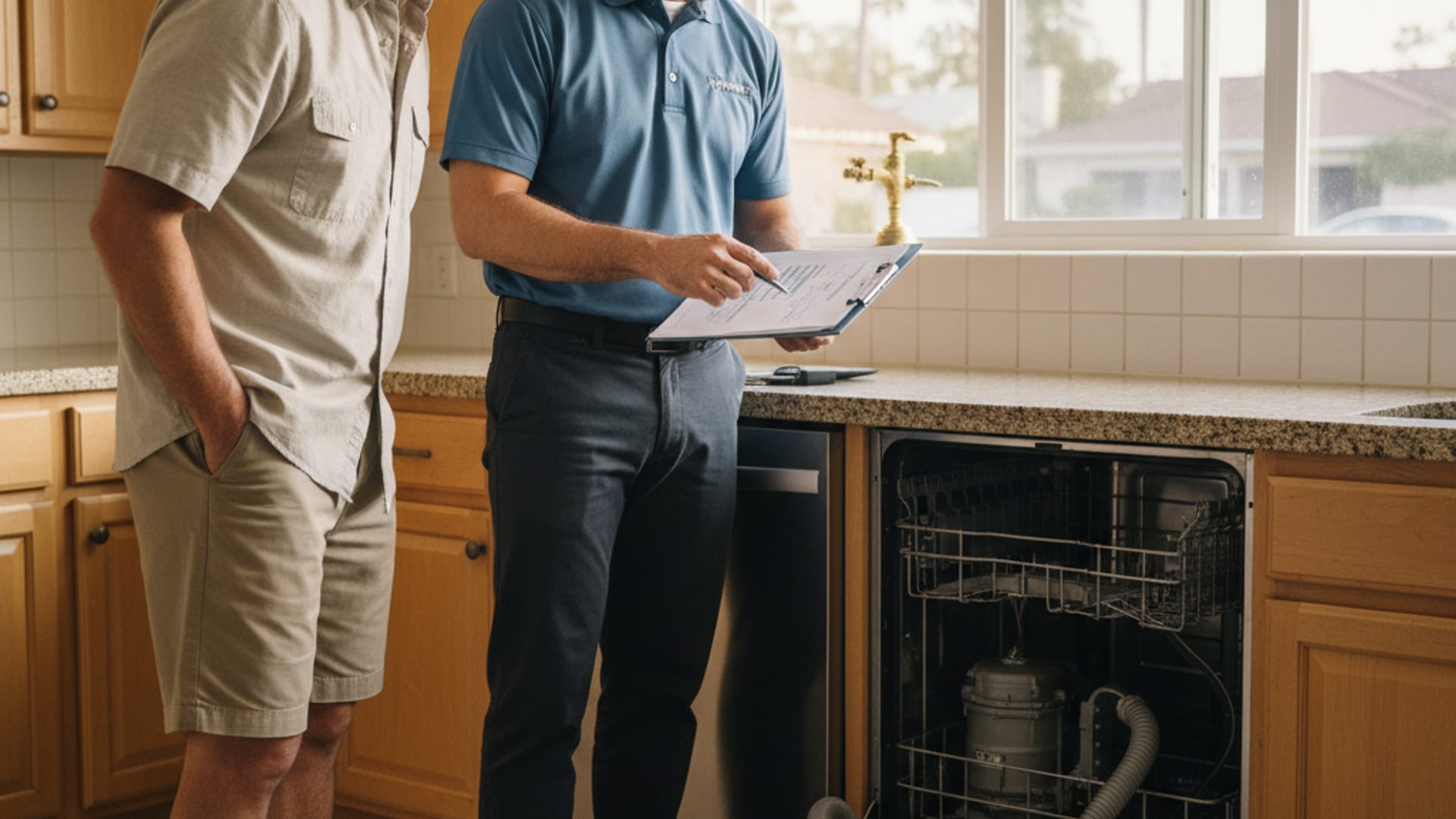
What does appliance repair cost?
How much does appliance repair cost in San Diego?
It depends on the failed part. Common fixes, drain pumps, igniters, door gaskets, heating elements, land at the low end of appliance work; compressor, bearing, and sealed-system jobs run higher. The tech you're matched with diagnoses first and quotes in writing before any work starts. Ask about their diagnostic fee and whether it's credited toward the repair.
Do you charge a trip fee?
Getting matched with a tech through us costs nothing. The tech sets their own diagnostic fee; ask whether it's credited toward the repair and whether your address carries any travel charge before you book.
What do you charge for after-hours or weekend calls?
Leave a voicemail at (858) 988-7787. The line records the request; a person does not pick up live. The matched tech sets after-hours and weekend rates, and many charge more for nights and Sundays. Ask for the full quote, including any surcharge, before approving work.
When is it worth repairing instead of replacing?
Compare the quoted repair with the cost of a similar new unit, remaining useful life, and whether parts are still sold. High-end built-ins such as Sub-Zero, Viking, Thermador, and Miele are often worth repairing because a new unit costs far more. The matched tech quotes both options in writing so you can decide.
What brands and appliances do you service?
What brands do you work on?
Common brands in San Diego homes include Whirlpool, Samsung, LG, GE, Maytag, KitchenAid, Frigidaire, Bosch, Kenmore, and Amana, plus high-end lines such as Sub-Zero, Viking, Thermador, Wolf, Miele, Fisher & Paykel, True Residential, U-Line, Marvel, Perlick, and Liebherr. Matching depends on the model and whether parts are still sold. Ask when you leave a message.
What appliances do you repair?
Refrigerators and freezers, washing machines, dryers, dishwashers, ovens, ranges, cooktops, microwaves, garbage disposals, ice makers, wine coolers, and beverage centers. Both residential and commercial units, all through vetted local techs.
Do you repair high-end built-in refrigerators?
Yes. Sub-Zero, Thermador Freedom, Viking Professional, Miele MasterCool, Liebherr, and True Residential built-ins are regular work for techs in the network. The matched tech quotes in writing. Ask them to document the visit if a property manager needs a report.
Do you service commercial appliances?
Yes. Restaurants, laundromats, offices, apartment buildings, property-managed portfolios. Walk-in coolers, ice machines, commercial washers and dryers, through commercial-experienced techs in the network. See the commercial page for contract details.
How fast can you get here, and how does a service call work?
How do I request a technician?
Arrival times vary and we don't promise one. The matched technician sets their own schedule. If you suspect a gas leak, leave immediately and call 911 or SDG&E at 1-800-411-7343 from a safe location. For appliance repair requests, leave a voicemail at (858) 988-7787 and we match you with a local tech covering your area.
What happens during a service call?
The tech arrives in the appointment window, listens to what's happening, runs a diagnostic, and gives you a written quote. If you approve, they do the work they can with parts on that trip. If a part has to be ordered, they schedule the return before they leave.
Do you offer a warranty on repairs?
Warranty terms come from the tech who does the work, so ask before you approve the quote. Some replacement parts also carry a factory warranty. Get the warranty in the paperwork with the quote.
Can I get a quote over the phone?
Accurate pricing needs a diagnostic in person, so no honest tech quotes a firm number over the phone. The tech you're matched with diagnoses first and quotes in writing. Ask about their diagnostic fee and whether it's credited toward the repair.
Common problem-specific questions
My fridge is warm but the freezer is still cold. What's wrong?
A common cause on many French-door and top-freezer models is a failed evaporator fan or a clogged defrost drain. The fan moves cold air from the freezer to the fresh-food section. When it quits, the freezer can stay cold while the fridge warms up. Other models fail the same way from a damper, thermistor, or control board, so the matched tech diagnoses before quoting.
Why does my washer walk across the floor on spin?
Worn shock absorbers or suspension rods are a common cause. The drum is no longer damped during high-speed spin and the cabinet walks. On many front-loaders it's a shock-absorber set; on many top-loaders, suspension rods. Unlevel feet, an overloaded drum, or a failed bearing can look the same, so the matched tech checks before quoting.
My dryer takes two cycles to finish a load. Is that a dryer problem?
Usually it's the vent, not the dryer. Lint accumulates in the hose and the wall run, airflow drops, moisture can't escape, and cycles run long. A clogged vent is also a leading cause of dryer fires. Vent cleaning is usually a full fix.
My dishwasher has standing water at the bottom. What do I do?
Three common causes: clogged drain hose, failed drain pump, or a clogged garbage disposal knockout plug (if you recently installed a new disposal). Order of diagnosis: drain line first, then pump under load. National cost guides such as HomeGuide put most dishwasher repairs between $100 and $300 as of August 2026. Those are national figures, not a San Diego price list. The matched tech diagnoses first and quotes in writing.
My oven won't heat. Is it worth fixing?
Often yes. The two most common failures are the bake element (electric) and the oven igniter (gas), both usually cheaper than a new oven. Control-board failures run higher. Ask the matched tech to quote repair against replacement so you can decide for that model.
Emergency appliance repair
What counts as an emergency?
A suspected gas leak comes first: leave the area immediately and call 911 or SDG&E at 1-800-411-7343 from a safe location. Active water leaks, sparking or smoking appliances, no-cool refrigerators with food at risk, and failed commercial refrigeration also need urgent attention. Things that can usually wait until the next business day include a non-heating oven, one burner out, or a slow ice maker.
What should I do while I wait for the technician?
Refrigerator: move cold or frozen food to a cooler with ice and keep the doors closed. Washer: shut off the water supply valves behind the machine. Dishwasher: shut off the water under the sink if it is actively leaking. For any suspected gas leak, do not wait for a technician. Leave immediately and call 911 or SDG&E at 1-800-411-7343 from a safe location.
Do you document repairs for insurance claims?
Ask the tech to write a service report with the failure cause, arrival time, and repair result. Homeowner's insurance often wants that with the invoice for food-loss or water-damage claims.
Broken appliance? Let us match you with the right local tech.
We'll connect you with a vetted, insured local appliance tech who diagnoses first and quotes in writing before any work starts.