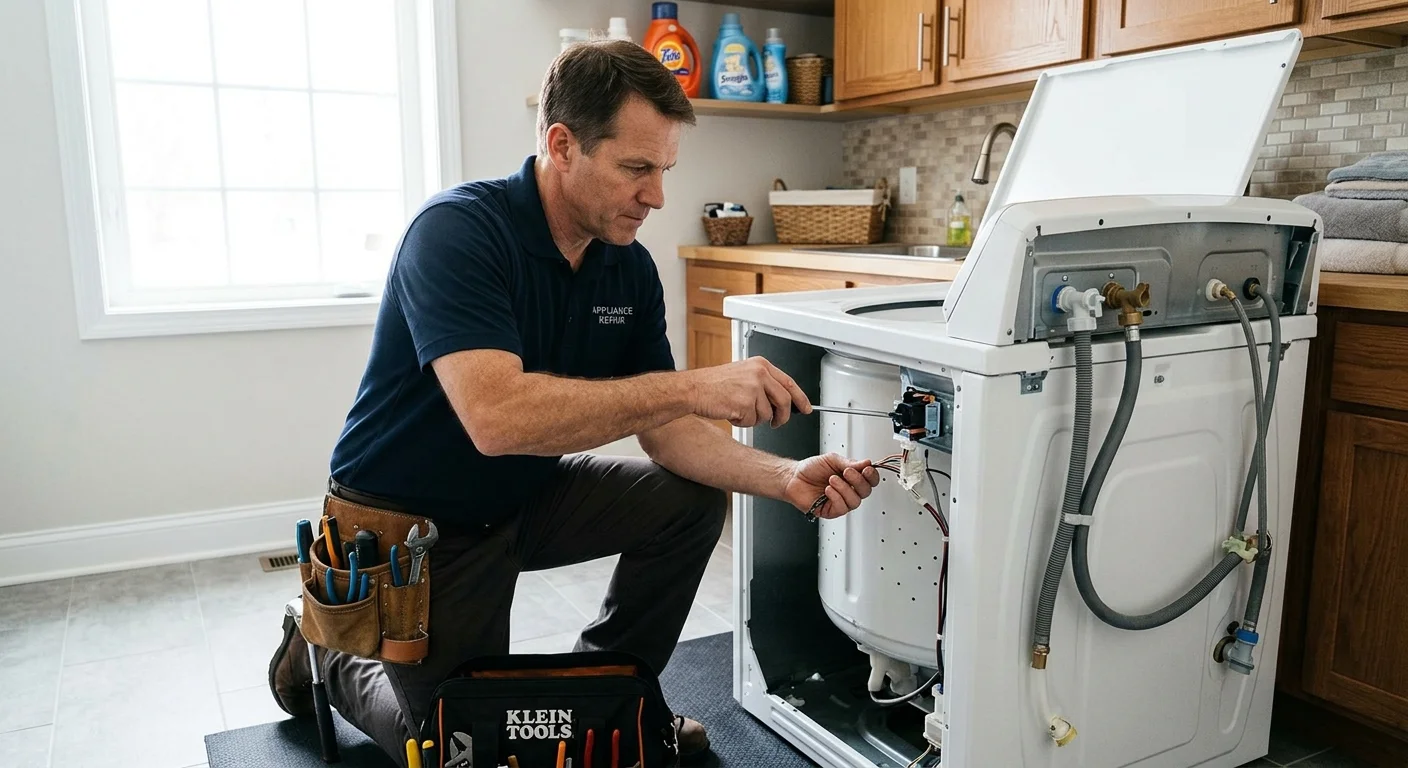
Maytag washing machine repair starts with the failed cycle stage. A technician identifies what the washer did, when it stopped, and which model is involved. That evidence helps separate a drain problem from a drive, control, or locking issue.
Common Maytag washer problems technicians diagnose
A useful diagnosis begins with a precise symptom. “It doesn’t work” could describe several unrelated failures. Tell the technician whether the washer fills, agitates, drains, spins, or completes the cycle.
Common service calls include a washer that won’t start or fill. Others involve standing water, slow drainage, leaks, loud movement, or clothes left unusually wet. A machine may also stop during one cycle while completing another.
Technicians don’t treat those symptoms as proof of one failed part. A stopped cycle might involve the controls, a latch, the drain system, or the drive system. The same visible symptom can have different causes across Maytag models.
Error codes can narrow the search, but they aren’t a final diagnosis. Record the full code exactly as shown. Also note the selected cycle and what was inside the drum. Don’t clear the display before writing that information down.
Sounds matter too. Describe whether you heard humming, clicking, grinding, or repeated attempts to start. A short phone recording can preserve a noise that disappears later.
Maytag has used different top-load and front-load designs. Component locations and diagnostic procedures can vary between them. The technician should identify the exact machine before recommending parts.
For information covering the brand’s other appliances, see our Maytag appliance repair guide for San Diego. This page stays focused on the washer and the technician’s diagnostic process.
The installation setting also helps. A washer in a Downtown San Diego laundry closet may offer different access than one in an El Cajon garage. Share photos of the washer, hookups, surrounding clearance, and displayed code when requesting a match.
What to check when the washer won’t drain
Standing water gives the technician a clear starting point. First, describe when drainage stopped. Water remaining after the wash stage differs from a machine that stalls before any drain attempt.
You can inspect the visible drain hose without opening the washer. Note any sharp bends, crushing, or movement behind the machine. Also mention whether a nearby sink or drain has been slow. These observations help separate an appliance problem from a household drainage issue.
The technician may then evaluate the drain path in stages. That can include the hose, accessible filter areas, pump, wiring, and the controls that command drainage. The order depends on the Maytag model and its documented layout.
Listen when the cycle reaches its drain stage. A hum with no water movement gives different evidence than silence. Repeated starts, clicking, or a displayed code are also useful details. Record what happens instead of repeatedly changing settings.
Don’t assume every Maytag washer has the same owner-accessible filter. Some online instructions apply to one product family only. The model number lets the technician find the correct Maytag documentation before opening panels or ordering a component.
Drainage and spinning also affect each other. A washer that retains water may not progress into the expected spin stage. That means replacing a drive component based only on wet clothes can miss the actual problem.
Our separate guide explains more homeowner observations for a washer that won’t drain. For local service options, the washing machine repair service page explains how we match San Diego County homeowners with independent technicians.
Before the visit, leave the remaining water and displayed code as found when practical. Tell the technician if you already changed a setting, moved the hose, or removed anything from the drain path. That history prevents an altered symptom from becoming a false lead.
Why a Maytag washer stops spinning
A spin complaint needs one important distinction: did the drum never turn, or did it turn without reaching the expected speed? Also note whether water remained inside. These details point the inspection toward different systems.
Load conditions can affect what you observe. Record whether the drum held one bulky item, a mixed load, or very little laundry. If the washer repeatedly redistributed the load, mention that behavior. Don’t treat a single interrupted load as proof that a component failed.
A technician may check the lid lock or door latch, depending on the design. The inspection can also involve drainage, drive parts, suspension components, wiring, and control output. The model-specific service information determines the proper test sequence.
A loud spin provides another diagnostic clue. Banging differs from scraping, grinding, or a steady hum. Note whether the sound changes as the drum gains speed. Photos of any visible movement can also help.
Avoid ordering a belt, motor, latch, or control from a symptom alone. Similar Maytag machines can use different components. A correct-looking part may still be wrong for the complete model number.
There also isn’t one reset procedure that fits every Maytag washer. Instructions found for another machine may change the display without correcting the underlying failure. Write down any reset or power interruption you already attempted.
The focused Maytag washer not spinning guide goes deeper into that single symptom. This broader guide covers the first checks used across drain, control, noise, leak, and cycle complaints.
A complete repair diagnosis connects the symptom to a tested cause. The written quote should identify the proposed work before it begins. That gives you a clearer basis for approving the repair or comparing it with replacement.
What the model number tells the technician
The model number identifies which Maytag washer is actually in the home. Color, capacity, and exterior appearance aren’t precise enough. Machines that look alike can use different controls, pumps, drive parts, or service procedures.
The technician uses that number to locate the correct product documents and parts information. It can also clarify whether an online troubleshooting step applies to your washer. The serial number provides a second identifier, so photograph both when they appear on the same label.
Label placement varies by design. Check visible areas around the opening, frame, console, or rear panel. Don’t remove a panel just to search for it. The owner’s materials may also identify the label location for your exact machine.
Take one close photo where every character is readable. Then take a wider photo showing the label’s position. Letters and numbers can look similar, especially on worn or reflective labels.
Keep these details together for the technician:
- The complete model and serial numbers
- The exact error code, including letters
- The cycle selected when the problem appeared
- What the washer did immediately before stopping
- Any unusual sound, movement, odor, or visible water
- Any settings, hoses, or parts already changed
The number also helps prevent guesswork when discussing parts. A technician can check compatibility against the identified machine instead of relying on a general description such as “Maytag top-loader.”
Location details matter during the match as well. Mention stairs, secured building access, stacked installation, or tight closet clearance. Those facts can affect how the independent technician prepares for a Chula Vista condo, North Park home, or Oceanside rental.
When to request professional washer repair
Request professional Maytag washer repair when the visible checks don’t explain the symptom. It’s also appropriate when diagnosis requires panel access, electrical testing, or component testing specific to the model.
Recurring problems deserve a full diagnosis. A washer that drains once and fails again may have an intermittent fault. The same applies when a code returns after changing the load or cycle. Give the technician the entire sequence, not only the latest result.
A useful service conversation should cover the symptom, diagnostic process, proposed repair, and written quote. Ask which component was tested and what result supported the recommendation. You can also ask about the technician’s diagnostic fee and whether it’s credited toward the repair.
Repair Pro San Diego doesn’t perform physical repairs or set technician prices. We match homeowners with licensed, insured, independent local appliance technicians across San Diego County. The matched technician diagnoses the washer and quotes the work in writing before it begins.
California appliance service dealers must register with the Bureau of Household Goods and Services. You can use the state’s Department of Consumer Affairs lookup to check a dealer’s current registration. Ask the technician what written coverage, if any, applies to the proposed parts and labor.
Share your model photo and symptom notes before confirming the match. A clear description helps the technician understand whether the call concerns drainage, spinning, leaking, noise, or controls.
For a wider local overview, read our guide to washing machine repair in San Diego. It covers service preparation and choosing a technician beyond Maytag models.
When to call us
Call when your Maytag washer keeps stopping, won’t drain, won’t spin, or needs model-specific testing by a licensed Appliance Repair pro. Repair Pro San Diego will refer you to an independent technician who handles the diagnosis and repair.
Call us at (858) 988-7787 and we’ll match you with a licensed local tech.