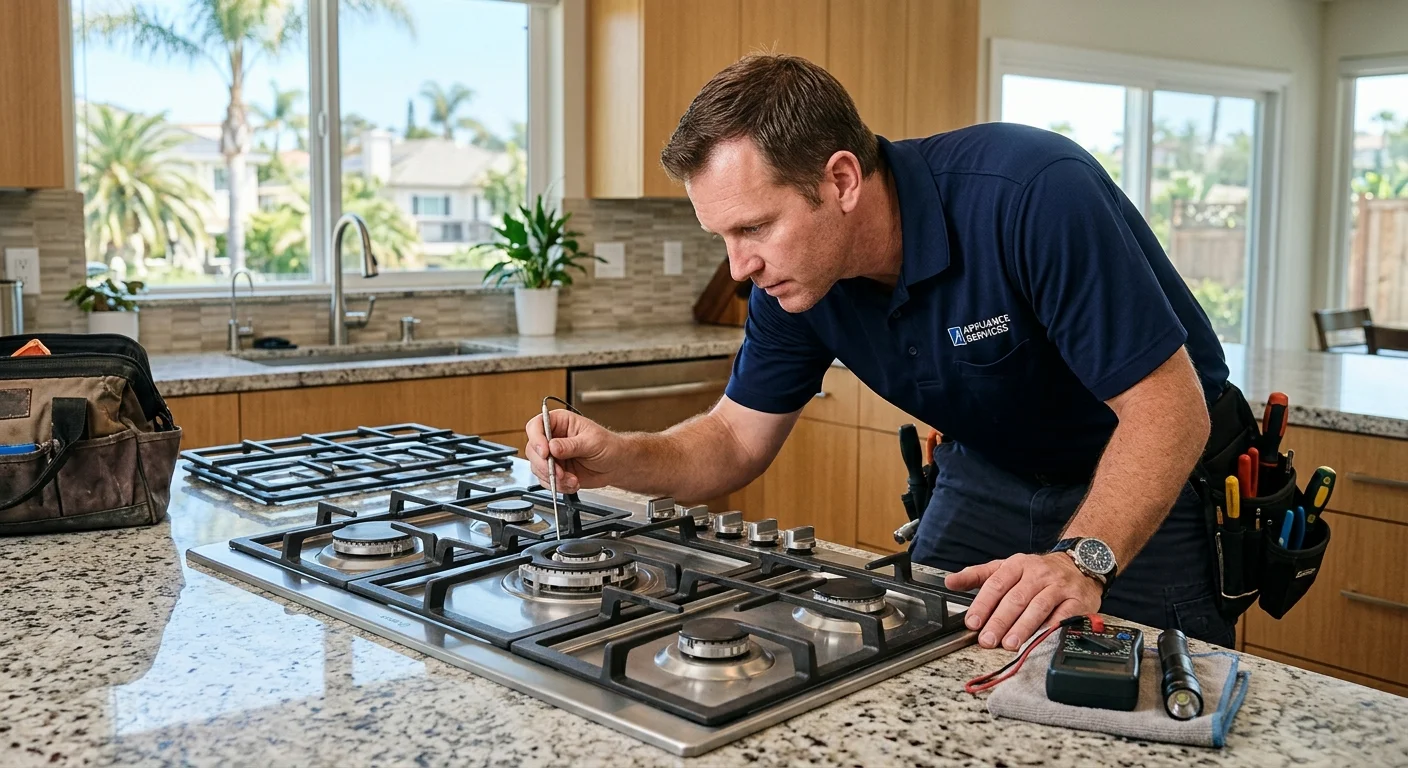
A dead burner stops dinner cold. Most stove problems trace to a handful of parts. A gas igniter that clicks but won’t light. An electric coil that burned through at one spot. An induction board that throws an error and shuts down. The technicians we match repair gas, electric, and induction cooktops across San Diego County. Below we walk through common inspection points, and where gas safety stops being a DIY job. Frequency is not ranked here.
Common stove problems local techs see in San Diego homes
The cooktop and the oven are separate systems, even in one range. The cooktop runs surface burners or elements. The oven runs bake and broil elements with their own sensor and control. They fail for different reasons. A clicking gas igniter is a worn spark electrode or a cracked ceramic. A dead electric coil is usually the element itself or the infinite switch behind the knob. An induction burner that quits mid-cook is often a heat-tripped board. Matched technicians bring their own test gear. A first-visit finish is not promised.
Some of the most frequent stove and cooktop problems in San Diego homes include:
- Burners not lighting or igniting: This is a common complaint for gas stoves, often related to igniters or gas flow.
- Electric elements failing to heat: Whether it’s a coil, radiant, or ceramic top, a non-heating element makes cooking impossible.
- Induction cooktops displaying error codes: Modern induction units use sophisticated electronics that can sometimes malfunction.
- Weak or inconsistent flames on gas burners: This can indicate clogs, regulator problems, or improper air-fuel mixture.
- Gas smells when the stove is off: A serious safety concern that requires immediate attention.
- Knobs or controls not working: Worn out or damaged controls prevent accurate temperature setting.
- Cooktop cracking or chipping: While sometimes cosmetic, this can affect safety and performance, especially on glass-ceramic surfaces.
Oven faults look different. A bake element that won’t heat, broil that works but bake doesn’t, or temps that run 50 degrees off all point at the oven, not the cooktop. A bad oven temp sensor or a failed bake element are the usual culprits there, and a stuck self-clean lockout will block the door and the heat. If both your oven and cooktop are acting up, describe both symptoms in your voicemail so the matched technician can quote the work together. See our oven and stove repair services for the full scope.
Gas stove issues: igniter problems, weak flames, gas smells
Plenty of homes from Chula Vista to Escondido run gas cooktops. A frequent complaint is a burner that clicks but won’t light. Start simple. Pull the burner cap and check the ports for crud or boil-over. A clogged port chokes the flame on one side. If the cap is clean and it still clicks without catching, the spark electrode is worn or the ceramic around it is cracked. If one burner clicks, they all usually click, since they share a spark module. When a burner lights but the others won’t spark at all, suspect that module or its harness.
A weak flame is a different problem. A strong burner runs a tight blue flame. Yellow or orange flames, or a low flame that won’t turn up, point at a partially clogged orifice or the burner valve behind the knob. A valve that feels gritty or won’t hold its setting needs replacing. A flame that’s weak across every burner usually means the pressure regulator. Yellow flames also mean incomplete combustion, which lays down soot and is worth fixing fast. Techs in our network clean or swap orifices, rebuild or replace valves, and reset the regulator to spec.
If you see, hear, or smell signs of a gas leak, leave the area immediately. From a safe location, call 911 or SDG&E at 1-800-411-7343. Do not stop to turn off the stove, open windows, or begin appliance troubleshooting before leaving. This follows SDG&E’s gas-appliance safety guidance. After emergency authorities or the utility have addressed the hazard, use our gas range safety checklist and arrange any needed appliance service. Gas-line work is separate from BHGS appliance-dealer registration. This brand does not hold a CSLB number.
Electric and induction cooktop repair: elements not heating, error codes
On a coil cooktop, a dead burner is the easiest call a technician gets. Swap the coil into a working socket. If it heats there, the receptacle block is burned. If it still won’t heat, the coil itself is open. Burned receptacle blocks are common on older coil ranges, usually from a loose plug arcing over time. On radiant glass-ceramic tops, the element sits under the glass and you can’t pull it out, so the technician tests it cold with a meter. A burner that only clicks on and off without holding heat is the infinite switch behind the knob, not the element. Techs in our network test each part before they condemn it, so you’re not paying for a guess.
Induction is its own animal. The element doesn’t heat. A coil under the glass throws a magnetic field that heats the pan, and a board runs the whole show. So induction faults read out as error codes, not dead coils. A code tied to a fan or high-temp fault often means the board overheated and shut down, sometimes from a blocked vent or a failing cooling fan. A single zone that won’t fire while the rest work points at that zone’s power module. A unit that won’t turn on at all is usually the main board or its power supply. The technician reads the model’s code chart, confirms it with a meter, then replaces the board, fan, or sensor that’s actually at fault.
Electric and induction cooktops run on 240 volts, so this isn’t a job to poke at with the power on. The technician locks out the breaker, tests cold, and only then digs in. Coil elements, receptacle blocks, infinite switches, and induction boards are common repair paths. Parts on the truck are the provider’s. First-visit completion is not a Repair Pro promise. When a board has to come from the manufacturer, the technician tells you up front before ordering it.
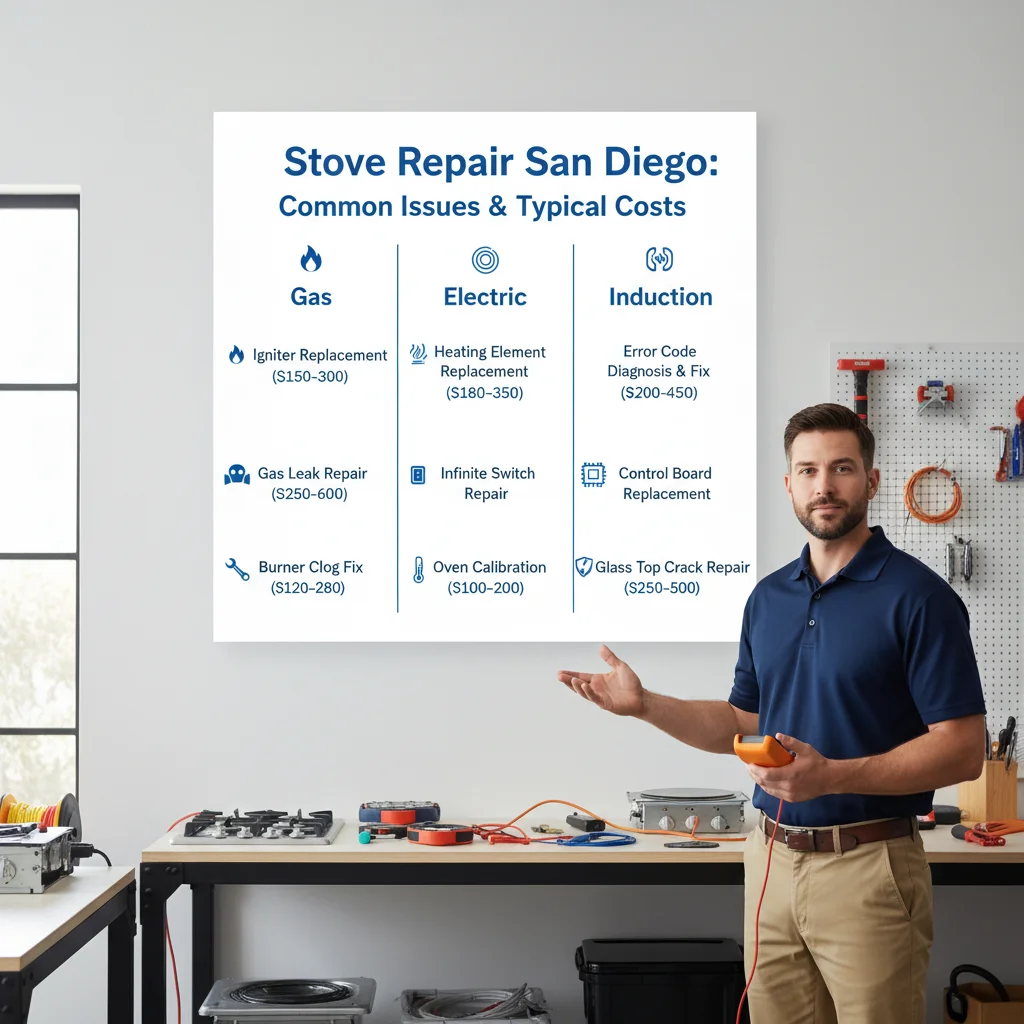
What you can expect to pay for a stove repair
What a stove repair runs comes down to the part. A spark electrode, a coil element, or an infinite switch is a cheap part and a quick job. A burner valve rebuild or a gas regulator takes more labor. An induction main board is the priciest part on the cooktop, since the whole unit runs through it. So a clicking igniter and a dead induction zone are not the same repair. The matched technician diagnoses the platform. Repair Pro does not touch the appliance.
The technician diagnoses the cooktop first, then writes the estimate before any work starts. That estimate names the part and the labor, so you see exactly what you’re approving. You sign off, then the technician gets to work. On most repairs that beats buying a new range, since a working cooktop rarely needs more than one part.
A repair done right the first time also stops the small problem from becoming a big one. A weak gas flame ignored long enough sets up incomplete combustion and soot. A loose coil receptacle that keeps arcing can melt the socket and the wiring around it. Those turn a one-part fix into a wiring job. For how stove work fits next to the rest of our pricing, read our guide on appliance repair cost in San Diego.
Booking service for your cooktop or range
A dead cooktop means takeout tonight, and nobody wants that. We cover San Diego County, from La Mesa to Oceanside, and match you with a technician near you. If you suspect a gas leak, leave immediately and call 911 or SDG&E at 1-800-411-7343 from a safe location before requesting appliance service. For other problems, parts on the truck are the provider’s. A clicking igniter or a burned coil receptacle can be a defined job after diagnosis. First-visit completion is not a Repair Pro promise, including after a parts order.
Leave a voicemail with the symptom. The matched technician sets their own arrival window. Have the brand and model handy if you can, since that tells the technician which spark module, valve, or board to bring. The model tag usually sits on a sticker under the cooktop edge or behind a front knob. The technician tests before swapping parts and leaves the kitchen the way they found it.
The techs we match may work on gas, electric, or induction. Ask whether the matched technician services your exact model. Whether it’s a burner that won’t spark, a coil that won’t heat, or an induction board throwing codes, the technician tests it, names the part, and gets it fixed. Leave a voicemail and we will match you with an independent technician.
Frequently asked questions
Why does my gas burner click but not light?
A worn spark electrode or a cracked ceramic insulator around it is the usual cause. Start by pulling the burner cap and cleaning out any clogged ports; food debris can block gas on one side and prevent ignition. If the cap is clean and it still clicks without catching, the electrode needs replacement. Since burners share a spark module, if one burner clicks but none of the others do, the module or its wiring harness is the likely fault.
What does a yellow or orange flame on a gas burner mean?
Yellow or orange flames mean incomplete combustion, which means the air-to-fuel mix is off. A partially clogged orifice or a burner valve that won’t hold its setting are the typical causes. Yellow flames across every burner usually point to the pressure regulator. Incomplete combustion lays down soot on your cookware and is worth fixing quickly.
How do induction cooktop error codes differ from gas or electric problems?
Induction cooktops don’t have elements that burn out. A coil under the glass throws a magnetic field that heats the pan, and a circuit board runs the entire system. So faults show up as error codes, not dead zones. A fan or high-temp code typically means the board overheated, often from a blocked vent or a failing cooling fan. A single zone that won’t fire while the rest work points to that zone’s power module.
Is it safe to attempt a gas stove repair yourself?
Follow the manufacturer’s instructions for routine cleaning. Anything involving the gas valve, supply line, or pressure regulator needs a qualified professional. If you see, hear, or smell signs of a gas leak, leave immediately and call 911 or SDG&E at 1-800-411-7343 from a safe location. Gas-line work is contractor work, separate from BHGS appliance-dealer registration.
When to call us
A broken stove or cooktop is more than an inconvenience; it can be a serious safety concern, especially with gas leaks or electrical faults. If you see, hear, or smell signs of a gas leak, leave immediately and call 911 or SDG&E at 1-800-411-7343 from a safe location. For other unusual behavior like strange odors or sparking, a qualified professional is the right call. Attempting complex repairs on gas or high-voltage electric appliances without proper training is dangerous and can void warranties. After emergency authorities or the utility have addressed a suspected leak, call us at (858) 988-7787 to get matched with a local technician.