Gas ranges need regular care and a clear response when something seems wrong. This checklist covers gas-range basics for San Diego homeowners, with SDG&E’s gas-appliance safety guidance for what to do if you suspect a leak.
Routine safety guidance for gas ranges
The flame pattern and ignition sequence vary by model. Follow the owner’s manual for instructions specific to your range. Follow the owner’s manual for foil, burner caps, and cleaning. This page does not add extra foil rules beyond the maker and the leave-and-call leak steps.
If you see, hear, or smell signs of a gas leak while checking the appliance, stop the check and leave the area immediately. Call 911 or SDG&E at 1-800-411-7343 from a safe location.
The gas-smell rule: when you smell it
Do not use odor strength or timing to decide whether a possible leak is serious. SDG&E also warns never to rely on your sense of smell alone to detect a gas leak.
If you see, hear, or smell signs of a gas leak, leave the area immediately. From a safe location, call 911 or SDG&E at 1-800-411-7343. Wait for emergency authorities or the utility to address the hazard before arranging appliance service.
Carbon monoxide, the silent issue
Poorly maintained or improperly used gas appliances can create fire and carbon-monoxide hazards. Follow the owner’s manual for cleaning and airflow. This page does not publish a yearly inspection schedule. SDG&E’s published gas-appliance safety guidance here is the leave-and-call leak response, not a brand maintenance contract.
Follow the alarm manufacturer’s instructions if a carbon-monoxide alarm activates. If you see, hear, or smell signs of a gas leak, leave immediately and call 911 or SDG&E from a safe location.
When ignition does not work normally
If the gas range igniter clicks but a burner does not light, stop using that burner and consult the owner’s manual. The cause cannot be confirmed safely from a generic symptom list. Keep the range top and burners clean using the manufacturer’s directions, and arrange qualified service if the problem continues.
If you see, hear, or smell signs of a gas leak at any point, leave immediately and make the emergency call from a safe location.
The oven igniter, different part, same issue
A gas oven can use a different ignition system from the cooktop. Delayed or failed ignition needs model-specific diagnosis, and a generic timing threshold does not establish that the igniter has failed. Stop using an oven that does not ignite reliably and have a qualified professional inspect it.
Owner maintenance checks
General precautions worth following:
- Leave gas connections, shut-off equipment, and leak response to qualified professionals and, when needed, 911 or SDG&E at 1-800-411-7343.
- Complete needed maintenance and repairs.
- Keep the area around the appliance clean, well ventilated, and free of anything that blocks normal airflow.
- Keep the burners and range top clean to help prevent grease fires.
- Follow the owner’s manual for installation, use, cleaning, and maintenance.
- Check the U.S. Consumer Product Safety Commission for recalls that affect the exact appliance model.
When to call, beyond DIY
Call a professional for:
- Any suspected gas leak, after leaving and calling 911 or SDG&E from a safe location
- Flame or ignition behavior that differs from the owner’s manual
- A burner that does not shut off normally
- Oven temperature behavior that remains unreliable
- Any range that was damaged in a move or a kitchen remodel
- Any work involving the flex connector, shut-off valve, or gas supply
Do not begin appliance troubleshooting while a gas-leak hazard may be present. Wait until emergency authorities or the utility have addressed the hazard, then arrange qualified appliance service if needed.
Frequently asked questions
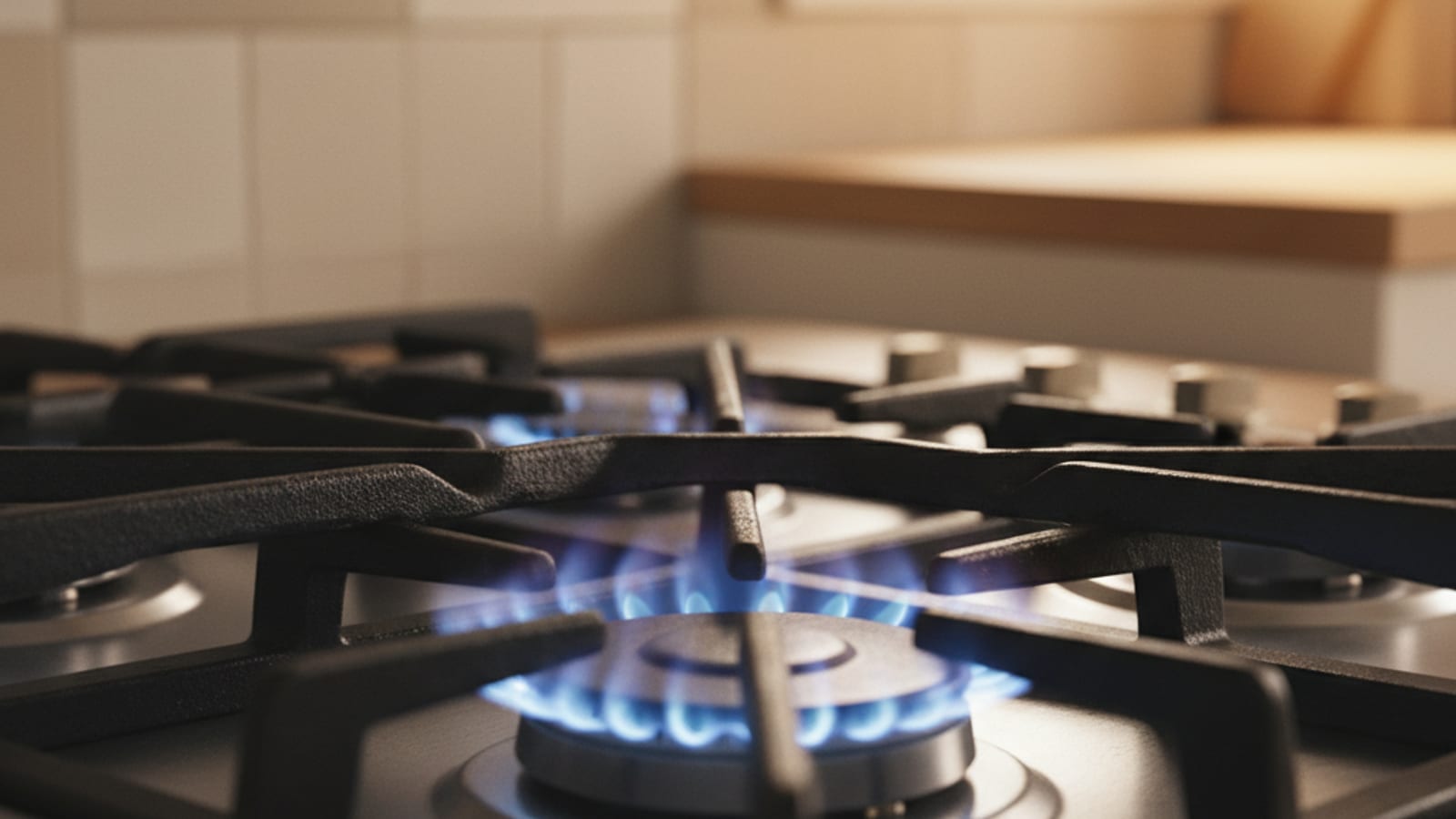
What does a healthy gas burner flame look like?
Flame appearance can vary by appliance and fuel. Follow the owner’s manual for the model. If the flame or ignition behavior changes, stop using the affected burner and arrange qualified service. Leave immediately and call 911 or SDG&E from a safe location if you see, hear, or smell signs of a gas leak.
What should I do if I smell gas in my kitchen?
Leave the area immediately. From a safe location, call 911 or SDG&E at 1-800-411-7343. Do not use odor intensity to decide whether to leave. This follows SDG&E’s gas-appliance safety guidance.
Why does my gas burner click but not light?
A clicking burner that does not light can have several causes, and the symptom alone does not identify the failed part. Stop using the affected burner, follow the owner’s manual, and arrange qualified service if the problem continues. If you see, hear, or smell signs of a gas leak, leave immediately and call 911 or SDG&E from a safe location.
How often should I service my gas range?
Keep the burners and range top clean, complete needed maintenance, and follow the owner’s manual. Leave gas connections and shut-off equipment to qualified professionals. If you see, hear, or smell signs of a leak, leave immediately and call 911 or SDG&E at 1-800-411-7343.
Bottom line
Use the owner’s manual for cleaning and airflow. This page does not publish a yearly inspection schedule. Treat any possible leak as an emergency: leave immediately and call 911 or SDG&E from a safe location.
After emergency authorities or the utility have addressed the hazard, the oven and range repair network can help with appliance diagnosis. East County homeowners can also use the appliance repair page for El Cajon. Ask about the diagnostic fee and whether it is credited toward the repair. (858) 988-7787.