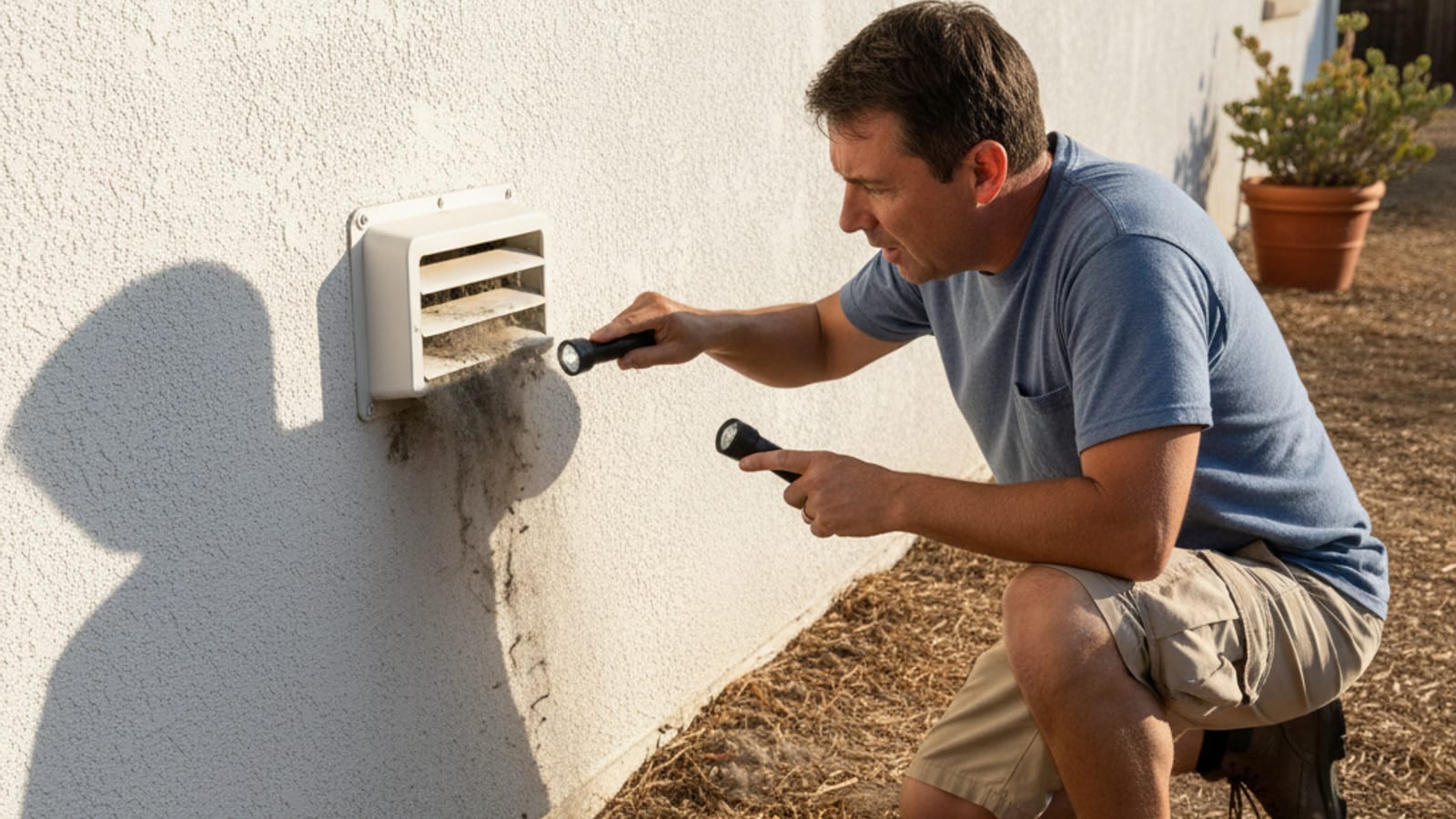
Lint in a dryer vent restricts airflow. Heat and moisture that should leave the house stay in the cabinet and the duct. That can lengthen drying times, overheat the dryer, and raise fire risk. Public fire-incident figures change by year and source, so this page does not treat a single national count as a fixed fact.
If a load needs two cycles, or the exterior hood shows packed lint, treat the vent as a real concern and keep the checks below on the outside of the machine.
Why dryer vents clog in the first place
Every cycle makes lint. The lint screen catches a share of it. The rest can travel with exhaust air into the hose and rigid duct, especially at bends. How fast that builds depends on the dryer, how you use it, pet hair, and the actual vent path in the house. There is no universal capture percentage or tract-home run length that applies to every San Diego floor plan.
Warning signs worth recording
Signs of a restricted vent can include:
- Clothes take two cycles to dry. Airflow may be limited; moisture is not leaving efficiently.
- The dryer cabinet feels hotter than usual. Heat that should be vented may be staying in.
- The laundry room gets warm and humid during a cycle. Exhaust may be backing up.
- Lint is visible at the exterior vent hood louvers. The hood is a useful observation, not a complete diagnosis.
- Burning smell, visible smoke, or fire. Leave the home and call 911. Do not stay to run another cycle or pull the dryer.
If you see, hear, or smell signs of a gas leak, leave immediately and call 911 or SDG&E at 1-800-411-7343 from a safe location. Follow SDG&E’s gas-appliance safety guidance. Do not operate the gas valve behind the dryer.
Owner checks that stay outside the cabinet
Unplug the dryer before you look closely at the lint screen. Clean the screen the way the owner’s manual describes, including the housing slot if the manual shows how to reach it.
Look at the exterior hood from outside. Note packed lint, a flap that does not move, or birds’ nests. Photograph what you see.
Stop there. Do not shut a gas valve, pull the dryer off the wall, disconnect the vent hose, feed brushes into wall or attic runs, or run an empty test cycle to “confirm” heat after a burning smell.
How often a given home needs professional vent cleaning depends on use, pets, and the actual duct. Follow the dryer manufacturer and any qualified cleaner who inspects the run, rather than a universal monthly or annual rule.
When it is not an owner job
Call a matched technician or a vent specialist when:
- The vent path is concealed in a wall, ceiling, or roof and you cannot see the full run.
- You smelled burning, saw smoke, or the dryer overheated. After 911 if there was fire or smoke, wait for the all-clear before requesting appliance service.
- The vent still looks packed after the lint screen is clean, or the dryer still will not heat.
Internal parts such as a heating element, thermal fuse, or high-limit thermostat are diagnosed inside the cabinet. That work is not a brush-kit job.
Cost without invented numbers
Professional vent cleaning and dryer repair are quoted from the actual run and access. Repair Pro San Diego does not publish a vent-cleaning price. If you are already requesting dryer service, ask the matched technician whether they inspect the accessible vent as part of that visit. The quote is in writing before work begins.
The habit that costs nothing
Clean the lint filter before every load when the manual says to. A packed filter sends more lint downstream.
The techs in our dryer repair network work across San Diego County, including appliance repair in Oceanside. Leave a voicemail at (858) 988-7787 to request a match.
Frequently asked questions
How often should a dryer vent be cleaned?
There is no single interval that fits every house. Follow the dryer manual and have a qualified person inspect long or concealed runs. Clear the lint filter before each load unless the manufacturer says otherwise.
What is a common sign that a dryer vent is clogged?
Clothes taking two full cycles is a useful early clue. Visible lint around the exterior hood is another. Neither one names the exact blockage without looking at the path.
Can a clogged vent cause the dryer to stop heating?
Yes. Restricted airflow can overheat the dryer and open a thermal fuse or other safety device. Replacing a fuse without addressing the vent often repeats the failure.
How much does professional dryer vent cleaning cost in San Diego?
Price depends on run length and access. The person who inspects the vent quotes in writing. A DIY brush kit does not replace a full inspection of a concealed duct.