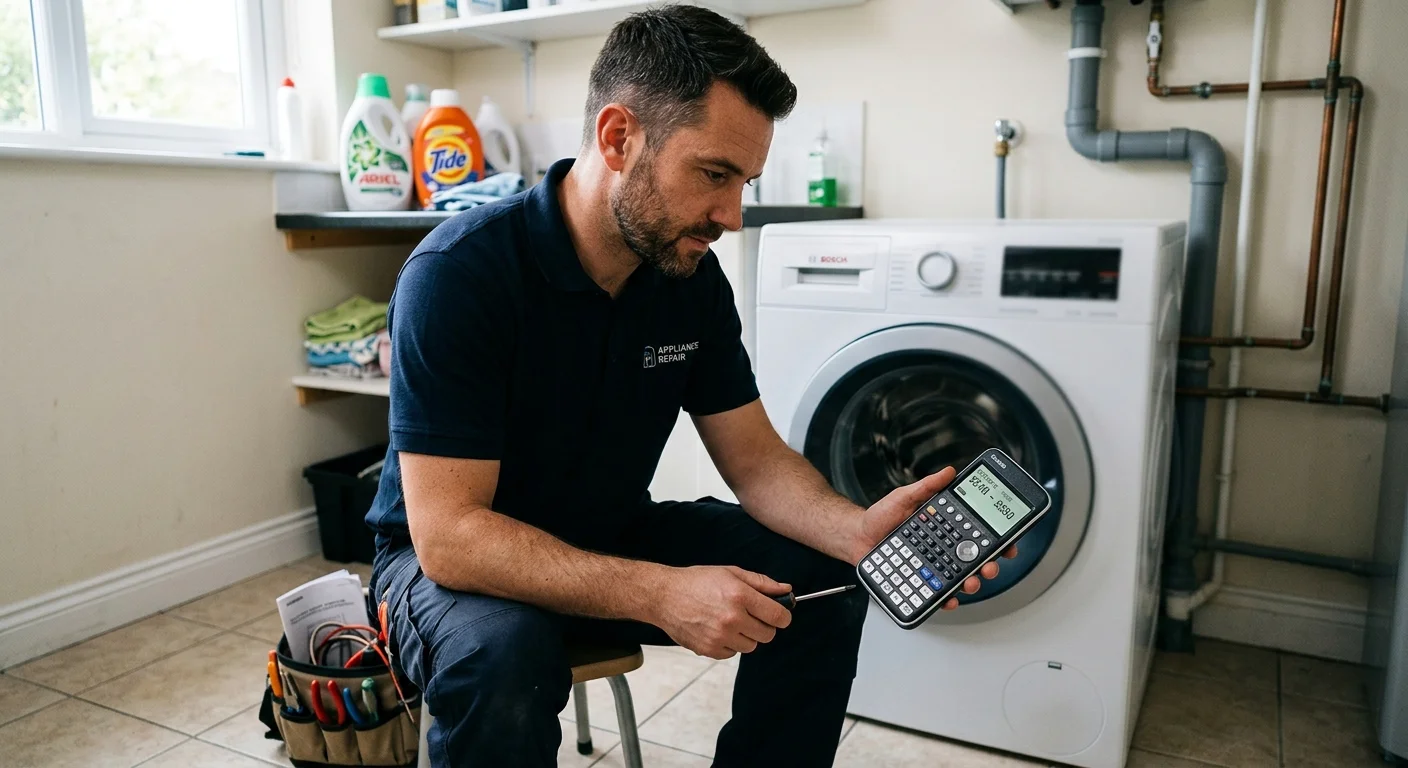
Washing machine repair costs in San Diego vary by what’s actually broken. A drain pump or door latch sits toward the low end of typical repairs; a motor replacement pushes toward the high end.
Repair Pro San Diego is here to walk you through what drives the price on common washing machine issues, and what to ask before you approve a repair.
What affects washing machine repair costs in San Diego
When your washing machine breaks down, the first question is always, “How much will this set me back?” There’s no single answer, since washing machine repair costs vary widely based on what’s broken, the part needed, and how much labor the fix takes.
Ask the technician about their diagnostic fee and whether it’s credited toward the repair. That fee typically covers a technician traveling to your home, inspecting the appliance, and diagnosing the fault before any repair work begins.
Here’s what to ask about the diagnostic fee before the technician starts:
- Is it credited toward the repair? Many technicians apply it to the total cost if you move forward, so you’re not paying twice.
- What does it cover? It should include the technician’s time diagnosing the actual problem, not just showing up.
- Is it due either way? Most technicians charge it whether or not you proceed with the repair, since it covers their diagnostic time.
For an accurate estimate for your specific washing machine problem, it’s best to have a professional technician take a look. Learn more about our specialized washing machine repair services here in San Diego.
Cost factors: what changes the final price?
Several key elements influence the final cost of your washing machine repair. Understanding these factors can help you anticipate the expense.
- Type of problem: A minor issue, like a clogged drain filter, will be far less expensive than a major component failure, such as a motor replacement.
- Part cost: The price of replacement parts varies significantly. Generic parts might be cheaper, but using OEM (Original Equipment Manufacturer) parts often ensures compatibility and longevity. High-end or specialized brands may also have pricier components.
- Labor time: Simple fixes that take less than an hour will cost less in labor than complex repairs requiring several hours of detailed work. Accessibility to the faulty part also plays a role; some components are much harder to reach than others.
- Appliance brand and model: Some brands, especially premium or smart appliance models, might have proprietary parts or more intricate designs, leading to higher repair costs. Older machines might also have parts that are harder to source, increasing either the part cost or the time it takes to get them.
- Urgency of service: Emergency or after-hours calls might incur higher labor rates from the technician.
- Technician expertise: Hiring a registered and experienced technician ensures a correct diagnosis and proper repair, potentially saving you money in the long run by avoiding repeat visits or further damage. Appliance repair companies in California register with the Bureau of Household Goods and Services (BHGS), not the CSLB. You can verify a company’s registration at bhgs.dca.ca.gov.
For a broader perspective on household appliance costs, check out our guide on appliance repair costs in San Diego.
Repair costs for common problems (drain pump, lid switch, motor)
Specific issues tend to land at different points on the price spectrum. Here’s what drives the cost for some of the most common washing machine problems technicians see in San Diego:
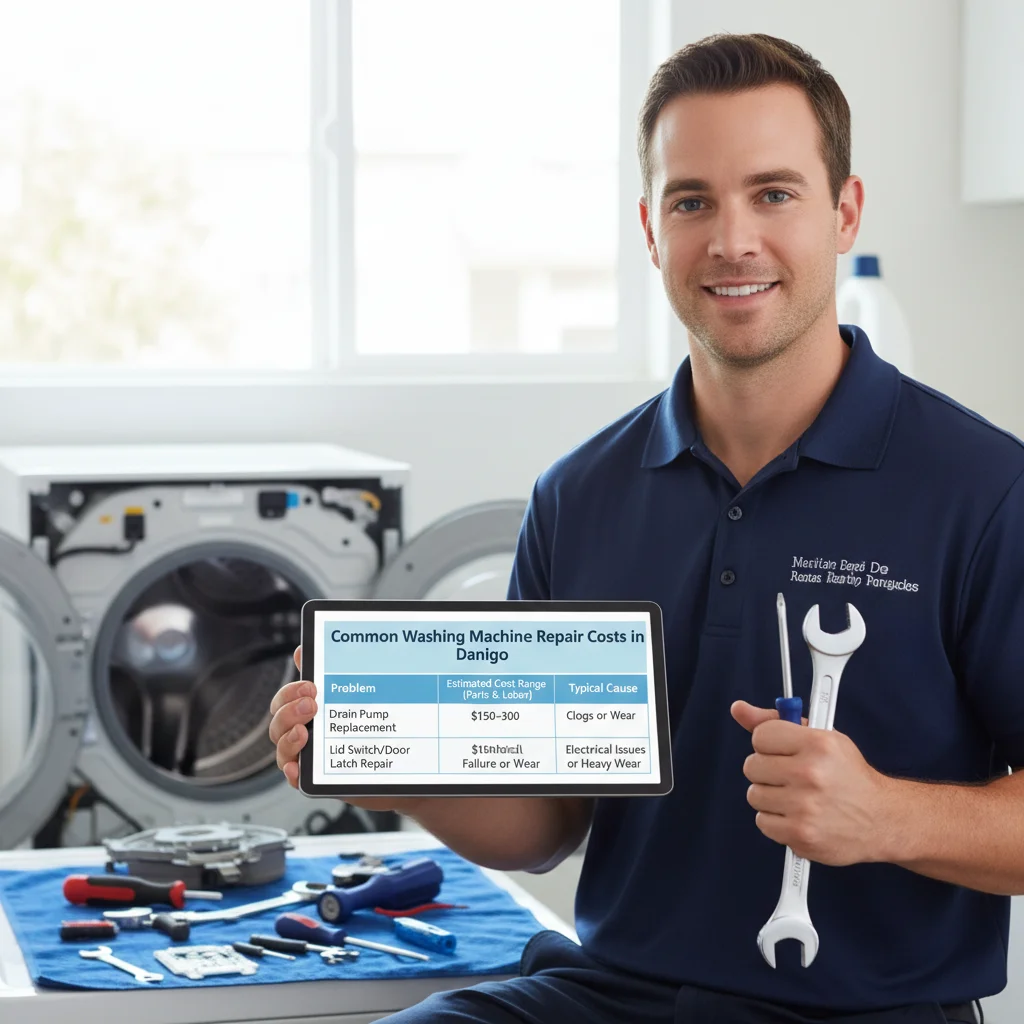
- Drain pump replacement: If your washer isn’t draining water, a faulty drain pump is often the culprit. This sits toward the lower end of washer repairs. The part itself is inexpensive, and the labor to access and swap it is usually straightforward.
- Lid switch/door latch repair: For top-load washers, a broken lid switch can prevent the machine from starting or spinning. Front-loaders have a door latch mechanism that can fail. This is one of the less expensive washer repairs, since the parts are relatively inexpensive and the labor is straightforward.
- Drive belt replacement: A slipping or broken drive belt can cause your washer to stop spinning or make loud noises. The belt itself is a moderate-cost part, and the labor depends on how accessible it is on your model.
- Water inlet valve repair: If your washer isn’t filling with water or is leaking from the back, the water inlet valve might be the problem. This typically lands in the mid-range for washer repairs: part cost plus straightforward labor.
- Motor replacement: This is one of the more significant and costly repairs. A faulty motor can prevent your washer from agitating or spinning. It sits at the high end of washer repairs, since the part costs more and the labor is more extensive.
These are general cost drivers, and the exact price will always depend on your specific appliance model, the part needed, and the technician’s labor rate. Ask for a written quote before any work starts.
Top-load vs. front-load washer repair costs
The design differences between top-load and front-load washing machines often translate into varying repair complexities and costs. If you are deciding between the two before you buy, our top-load vs front-load washer guide breaks down which is better for cleaning, lifespan, and repair cost.
Top-load washers are generally simpler in their mechanical design. They typically have fewer electronic components and their inner workings are often more accessible. This means:
- Lower labor costs: Technicians can usually access and replace parts more quickly.
- Generally less expensive parts: Many common parts are standardized and readily available.
- Typical repairs: Lid switches, agitator components, and drive belts are common issues, often falling into the lower-to-mid range of repair costs.
Front-load washers, on the other hand, often feature more advanced technology and intricate designs. Their horizontal drum layout means they can have different common failure points and require more specialized repairs:
- Higher labor costs: Components like the drum bearings are deep within the machine, requiring significant disassembly.
- Potentially more expensive parts: Specialized door boot gaskets, control boards, and larger motors can add to the expense.
- Common costly repairs: Bearing replacement (if the machine is loud during spin cycles) can be particularly expensive, since it requires extensive labor to reach. Mold or mildew issues with the door gasket, while often a DIY cleaning task, can require replacement if severe, which adds a moderate parts and labor cost.
While a simple drain pump issue might cost similarly for both types, major mechanical failures often see front-loaders at the higher end of the repair spectrum.
Is it cheaper to repair or replace your washing machine?
This is a common dilemma for San Diego homeowners. Deciding whether to repair your existing washing machine or invest in a new one depends on several factors:
- The “50% rule”: A good rule of thumb is to consider replacement if the repair cost is more than 50% of the price of a new, comparable washing machine. If your repair bill is approaching half the cost of a brand new unit, replacing might be the smarter long-term financial decision.
- Age of the appliance: Most washing machines typically last 8-12 years. If your washer is nearing or past the 8-year mark and needs an expensive repair (like a motor or transmission), it might be more economical to replace it. Older machines are more likely to experience further breakdowns soon after a repair.
- Frequency of repairs: If your washing machine has required multiple repairs in the past year or two, it’s likely a sign of general wear and tear. Continuing to fix it could become a money pit.
- Energy efficiency: Newer washing machines are significantly more energy and water-efficient. An ENERGY STAR certified model, especially with the EPA WaterSense label, can save you money on utility bills over its lifetime. These savings can offset the cost of a new appliance over time.
- Warranty: If your washing machine is still under manufacturer warranty, repairing it is almost always the best choice, since the costs are typically covered.
We have a detailed article that explores this decision further: Repair or Replace an Appliance. It offers insights that can help you weigh your options effectively.
Ultimately, the matched technician will give you an honest assessment of your washing machine’s condition and a written estimate, helping you make the best choice for your San Diego home and budget.
Frequently asked questions
How much does it cost to fix a washing machine that won’t drain in San Diego?
A drain pump replacement is toward the lower end of washer repairs, parts and labor combined. That’s usually the culprit when a washer won’t drain. Before calling, check the drain pump filter for clogs and make sure the drain hose isn’t kinked, since those are free fixes. If cleaning the filter doesn’t solve it, the pump itself needs replacement.
What is the most expensive washing machine repair?
Motor replacement is the costliest common repair, since both the part and the labor run higher, depending on the motor type and the washer model. Drum bearing replacement on front-loaders is close behind, because the labor alone is extensive. If either repair approaches half the cost of a comparable new machine, replacement is worth considering.
Is the diagnostic fee credited toward the repair?
That depends on the technician. Ask about their diagnostic fee and whether it’s credited toward the repair before they start the visit.
Should I repair or replace a washing machine that’s 10 years old?
It depends on the repair cost. The general rule is to replace when the repair exceeds 50% of the price of a new comparable machine. Most washing machines typically last 8 to 12 years, so a 10-year-old unit with an inexpensive fix, like a lid switch or a drive belt, is usually worth repairing. A 10-year-old machine needing a motor is closer to a coin flip.
When to call us
If your washing machine is making strange noises, leaking, not spinning, or simply won’t turn on, it’s time to call a professional. Appliance repair involves electrical components, water lines, and heavy machinery, which are best handled by qualified experts for your safety and to prevent further damage.
Call us at (858) 988-7787 and we’ll get you matched with a technician.