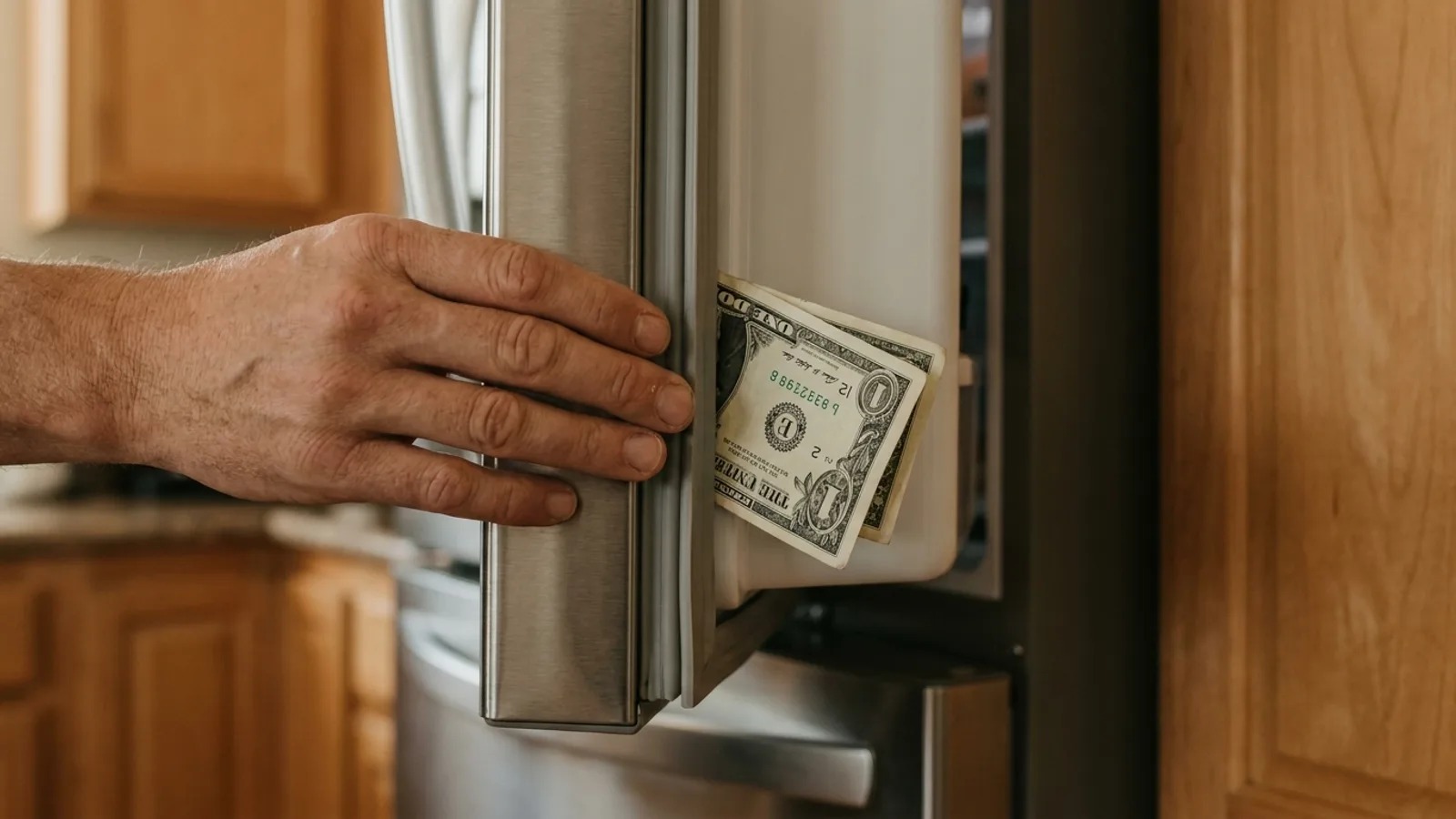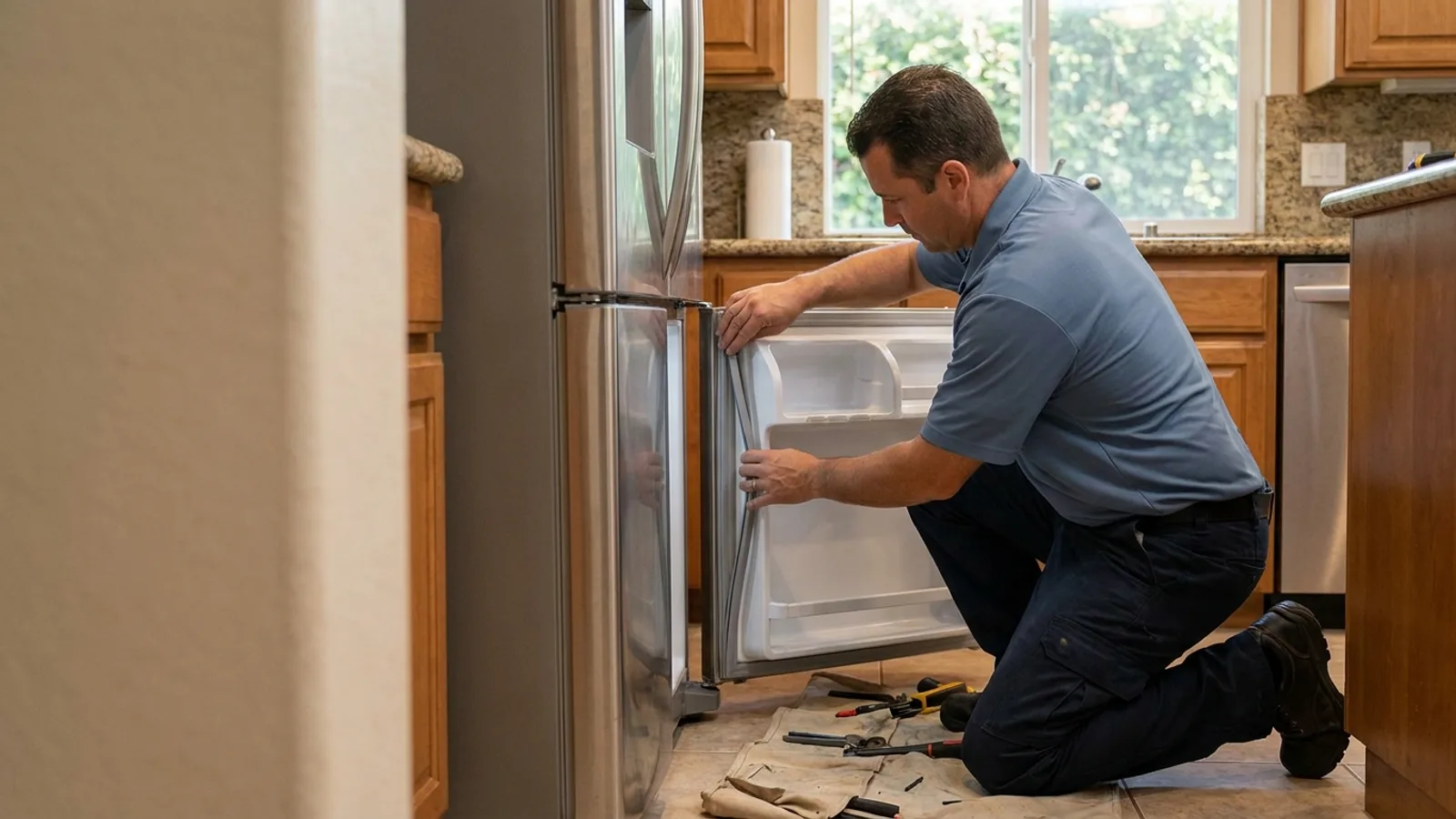
Close the refrigerator door on a dollar bill so half hangs outside, then pull. If it slides out with little or no resistance, the door seal is worn and letting cold air escape. A worn refrigerator door seal makes the fridge run warm, causes condensation on the door and shelves, and drives up the energy bill because the compressor never stops trying to catch up. A gasket replacement is one of the cheaper refrigerator repairs: the part is modest, the labor is quick, and premium built-in brands cost more than mainstream ones. Ask the technician about their diagnostic fee and whether it’s credited toward the repair.
How do I know if my refrigerator door seal is bad?
Run the dollar-bill test at three or four spots around the door, top, bottom, and both sides, since a seal often fails unevenly. Close the door on the bill each time and pull it out slowly. A good seal grips the bill and you feel real resistance. A bad seal lets it slide out too easily, and that gap is where cold air is leaking out right now.
A handful of other signs point the same direction. Condensation or sweat forms on the outside of the door or on nearby cabinets. Frost builds up faster than normal in the freezer compartment. The compressor runs almost constantly instead of cycling on and off. There’s a warm spot on the door near the hinge side, where the seal takes the most wear. And visually, look for cracks, tears, or flattened sections in the rubber, plus black mildew growing in the folds where moisture collects.
Any one of these on its own is worth a closer look. Two or more together usually means the seal needs to come off.
What a bad refrigerator door gasket does to your fridge
Once the refrigerator door gasket stops sealing, warm kitchen air keeps sneaking into the cabinet every time the compressor cycles down. The compressor has to run longer and more often to hold temperature, which shows up as a higher SDG&E bill within a month or two. Meanwhile the extra moisture entering the box condenses on cold surfaces, and that moisture is what feeds mold and mildew along the door liner over time. In the freezer, the same air exchange shows up as frost buildup on the walls and around the door frame.
None of this fixes itself. A gasket only gets stiffer and more brittle with age, so the leak gets worse, not better. If the fridge already isn’t holding temperature well beyond just a leaky door, check our fridge not cooling checklist to rule out other causes before assuming the seal is the only problem.
How to replace a refrigerator door seal
Most refrigerator door seal replacements are a reasonable DIY project if you’re comfortable working carefully and have some patience.
- Find the exact part. Pull the model number off the sticker inside the fridge, usually on a side wall or under the crisper drawer, and order the OEM gasket that matches it. Generic gaskets rarely seat correctly.
- Soak the new gasket in warm water for 10 to 15 minutes before installing it. This relaxes the rubber and makes it far easier to seat into the channel.
- Access the channel. On most fridges the gasket tucks into a retaining channel behind the liner, either held by screws along the edge or simply pressed into a groove. Loosen the screws a section at a time rather than all at once.
- Remove the old gasket, working it out of the channel a few inches at a time.
- Press the new gasket in starting at the corners, then work along each side, tightening the retaining screws gradually as you go so the gasket doesn’t bunch up.
- Recheck the seal with the dollar-bill test once it’s installed, at the same spots you tested before.
If the door itself has sagged on its hinges, a new gasket won’t fully solve the leak. A sagging door needs realignment first, and that’s a case where calling in a refrigerator repair technician saves you from buying a second gasket.
How much does refrigerator door seal replacement cost in San Diego?
A gasket replacement is one of the cheaper refrigerator repairs. The part itself is modest, and once a technician has the right one in hand, the labor is quick. Sub-Zero, Viking, and other premium built-in brands cost more than mainstream ones, since their gaskets are model-specific and not stocked everywhere. Standard brands like Whirlpool, GE, LG, and Samsung tend to cost less to source and install.
The other factor that moves the price is whether the door needs realignment along with the new seal. A door that’s sagged on its hinges adds labor time beyond a straight gasket swap. Ask the technician about their diagnostic fee and whether it’s credited toward the repair, so there’s no surprise cost to have a tech confirm the seal is actually the issue before ordering a part. The matched technician diagnoses first and quotes in writing before any work begins. For the full range of what other refrigerator repairs run, see our refrigerator repair cost guide for San Diego.
Freezer door seals and dishwasher door gaskets
The same failure shows up on other appliance doors, just with different tells.
A freezer door seal wears out the same way a refrigerator door seal does, and the giveaway is frost. If you’re seeing heavier freezer frosting up than usual, especially around the door frame rather than in a solid sheet on the back wall, a worn freezer gasket is a likely cause. The fix and the dollar-bill test are identical to the refrigerator door.
A dishwasher door gasket wears differently. Instead of warm air and higher bills, a failing dishwasher seal shows up as water on the kitchen floor after a cycle. If you’re dealing with that, our guide on dishwasher leaking from the bottom walks through how to confirm the door gasket is the source before replacing it, and a dishwasher repair technician can swap it.
When a new seal isn’t the real problem
A new door seal is one of the cheapest fixes on a refrigerator, but it’s not the answer to every cooling complaint. If the fridge is older and nearing the end of its typical lifespan, and it’s also showing signs of a failing compressor, like warm temperatures even with a good seal, it’s worth weighing repair against replacement before spending money on parts. Putting a fresh gasket on a fridge whose compressor is on its way out is money that won’t pay off.
Check what temperature the fridge is actually holding first. Our guide on what temperature a refrigerator should be explains the target range and how to test it with a thermometer, which tells you whether you’re dealing with a seal problem, a cooling system problem, or both. And if you’re also seeing water pooling inside or under the unit, that’s usually unrelated to the door seal. Our refrigerator leaking water guide covers that separately.
Frequently asked questions
How long does a refrigerator door seal last?
A refrigerator door seal typically lasts for years under normal use, but not indefinitely. Heat, humidity, and repeated opening and closing all wear the rubber down faster, so a fridge in a garage or a coastal home may need a new one sooner.
Can I fix a refrigerator door seal without replacing it?
Cleaning the gasket and using a hair dryer or warm water to reshape a slightly warped section can buy some time, but it’s a temporary fix. Once the rubber is torn, cracked, or hardened, it needs to be replaced rather than repaired.
Why is my refrigerator door seal sweating?
Sweating happens when warm, humid air meets the cold surface of the seal and condenses. It’s common in coastal homes in Encinitas and other humid parts of San Diego County even with a healthy seal, but a failing seal makes the sweating noticeably worse.
Do I need the exact gasket for my model?
Yes. Refrigerator door gaskets are molded to fit a specific model’s door frame and channel. A generic or mismatched gasket usually won’t seat properly and won’t seal, so it’s worth ordering by model number rather than by size alone.
Is a bad door seal worth fixing?
Yes. It’s one of the least expensive refrigerator repairs there is, and it stops the two costly side effects of a leak: a warm fridge that risks spoiled food, and a compressor that runs constantly and pushes up the energy bill.
When to call us
If the dollar-bill test came back loose, or you’re seeing condensation, frost, or a warm spot near the hinge, the technicians in our network can confirm it’s the seal and get the right OEM gasket ordered. The network covers all of San Diego County, from coastal neighborhoods to East County. A warm fridge full of groceries isn’t something to sit on, and if it’s turned into a bigger problem, our emergency appliance repair page covers what counts as urgent.
Call (858) 988-7787 to get a technician scheduled.