Your old dryer has tumbled its last load, and now you’re facing a classic laundry room decision: gas or electric. In San Diego the answer starts with hookups, then SDG&E running-cost factors, then drying time and vent safety. Check a current SDG&E rate sheet for your account.
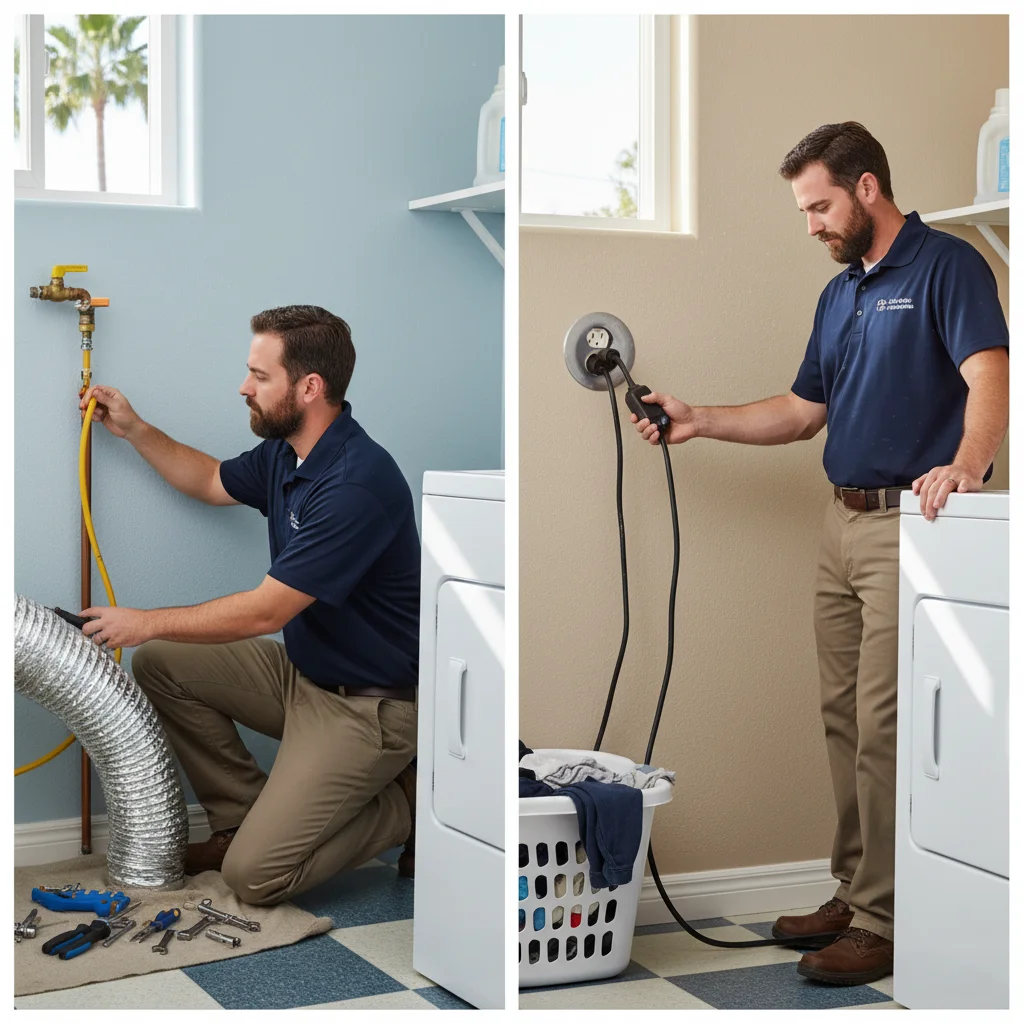
Hookups first. An electric dryer needs a dedicated 240-volt, 30-amp outlet. A gas dryer needs a standard 120-volt plug plus a capped natural gas line. If you only have one of those, that usually settles the purchase unless you are already remodeling.
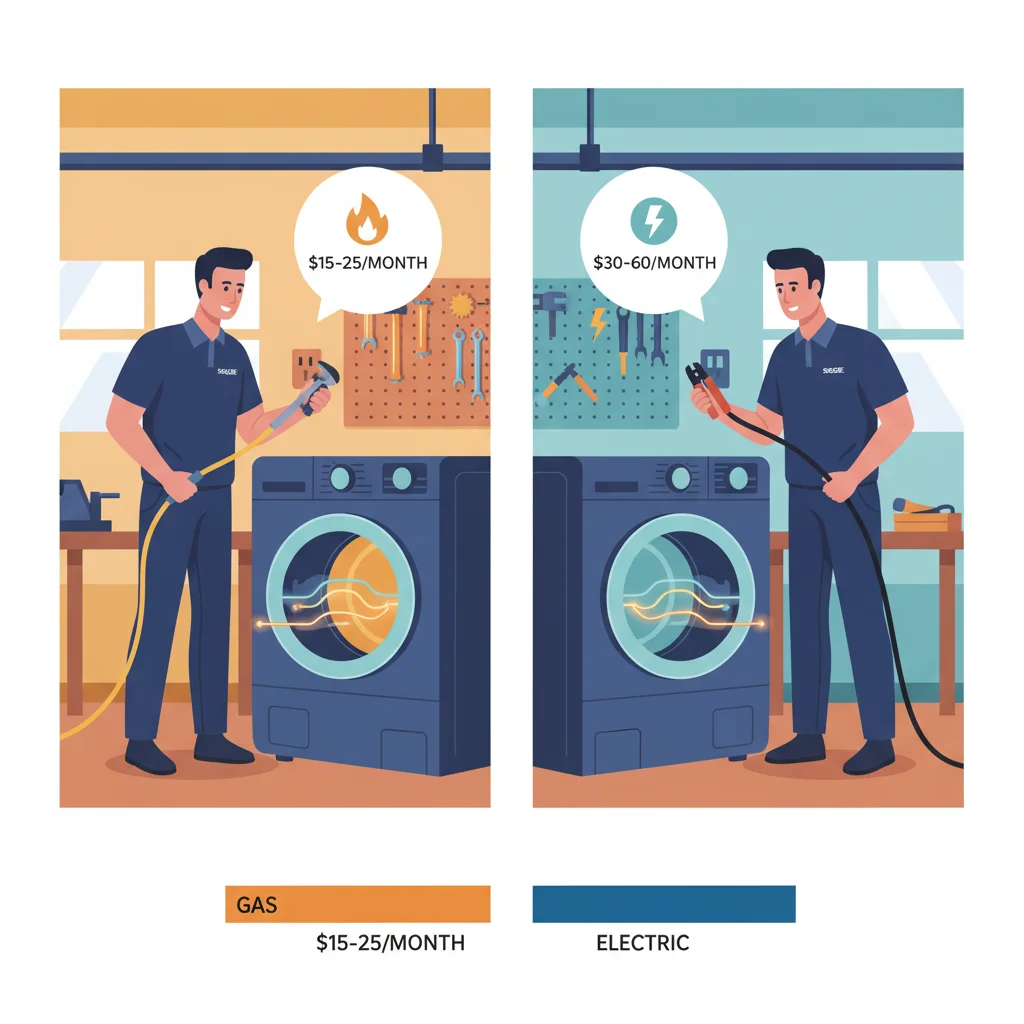
Running cost. Natural gas is typically cheaper per unit of energy than electricity in the SDG&E service area, so a gas dryer usually costs less to heat each load. Exact dollars change with your rate plan.
Drying time. Gas heat comes on immediately. Electric coils take time to warm. Gas cycles often finish about 15 to 20 minutes faster. That is a typical pattern, not a measured San Diego statistic.
Vent safety. Lint in the vent is a fire hazard on both types. Clean the lint filter after every load. If you see, hear, or smell signs of a gas leak, leave immediately and call 911 or SDG&E at 1-800-411-7343.
Upfront cost vs. long-term running cost in San Diego
The first thing you’ll notice when shopping for a new dryer is the price tag. Electric models often list for less than a matching gas model. Compare current retail quotes for the exact pair you are considering. This page does not publish a purchase-price gap.
However, the purchase price is only one part of the equation. The long-term running cost is where the real difference emerges, especially for San Diegans. While you save a little money on day one with an electric dryer, a gas dryer will almost always save you more money over its lifespan.
The key factor is the cost of energy. Natural gas is significantly cheaper than electricity in our region. A gas dryer might cost a bit more to buy, but it pays you back with lower utility bills month after month. Think of it as an investment that yields returns every time you do a load of laundry. Before you let the sticker price make your decision, you have to consider how our local utility rates play into the total cost of ownership.
How SDG&E rates affect your monthly bill
This is where the choice becomes clearer for most San Diego homeowners. Natural gas and electricity are priced differently per unit of energy delivered, and that gap drives the difference in running cost between the two dryer types.
The math plays out the same way every cycle. An electric dryer pulls its heat entirely from the grid, so every load runs at the full electric rate. A gas dryer only uses electricity to turn the drum and power the controls, while the heat itself comes from burning natural gas, the cheaper of the two energy sources. Because of that gap, a gas dryer typically costs meaningfully less to run per load than an electric one.
Run four loads a week and that per-load gap adds up to a real monthly difference on your utility bill, and it keeps adding up over the typical lifespan of a dryer. Utility rates change year to year, so check a current SDG&E rate sheet for the exact numbers that apply to your account. When looking for a new appliance, always check for the ENERGY STAR label, which certifies the most efficient models on the market.
Drying performance: does one work better in our climate?
Beyond cost, performance is a key factor. You want a dryer that gets your clothes dry quickly and efficiently without damaging them. In this category, gas dryers generally have the edge.
Gas dryers produce heat instantly, allowing them to reach their target temperature much faster than electric models, which rely on heating coils that take time to warm up. This means gas dryers typically finish a cycle 15-20 minutes faster than their electric counterparts. For busy families, that saved time can make a real difference on laundry day.
Does San Diego’s mild, dry climate matter? To some extent. We don’t struggle with the heavy humidity found in other parts of the country, so both types of dryers perform well here. However, the faster drying time of gas models still provides a tangible benefit. Less time spent tumbling in the heat can also be gentler on your clothes, extending the life of your fabrics and reducing wear and tear. While an electric dryer will certainly get the job done, a gas dryer often does it faster and more efficiently.
Installation requirements for gas and electric models
This is often the deciding factor, regardless of cost or performance. The type of dryer you can install is determined by the hookups available in your laundry room.
-
Electric Dryers: These require a dedicated 240-volt, 30-amp circuit. This is a large, specialized outlet that looks different from a standard wall socket, it usually has three or four large prongs. Most homes built in the last 40 years have one in the laundry area. If you don’t, an electrician will need to run one from the panel, which can be a costly project, Bright Pro Electric handles 240-volt dryer and range circuits in San Diego homes.
-
Gas Dryers: These need two connections. First, they plug into a standard 120-volt wall outlet to power the drum, controls, and lights. Second, they require a capped natural gas line, similar to the one for a gas stove. If your home already has a gas line in the laundry room, installation is straightforward. If not, you’ll need a licensed professional to run a new line, and they quote that work separately.
Before you shop, check your laundry room. If you see both a 240v outlet and a gas pipe, you have a choice. If you only have one, your decision is likely already made for you unless you’re planning a major renovation.
Safety and maintenance considerations for each type
Both gas and electric dryers are safe when installed and maintained correctly. The most significant safety concern for both is not the energy source, but the ventilation. Lint in the dryer vent is a fire hazard. This page does not publish a national incident ranking.
Regardless of which type you own, you must clean the lint filter after every single load. The full vent duct, from the dryer to the exterior, needs periodic cleaning. There is no universal one-to-two-year interval on this site. Follow the maker guidance and have a technician inspect the run if heat, smell, or airflow is off. A clogged vent not only creates a fire hazard but also forces your dryer to work harder, wasting energy and wearing out components. For a complete overview of best practices, check out our full dryer vent safety guide.
For gas dryers, maintenance also involves the gas connection and combustion system. If you see, hear, or smell signs of a gas leak, leave the area immediately and call 911 or SDG&E at 1-800-411-7343 from a safe location. SDG&E warns that odor can fade, so do not rely on smell alone to rule out a leak. See SDG&E’s gas-appliance safety guidance.
If you suspect your appliance isn’t running efficiently or you hear strange noises, it might be time for a professional check-up. Sometimes, a simple fix is all that’s needed to restore performance and ensure safety. If your dryer is older, you may be debating if it’s better to fix it or get a new one. Our guide can help you decide whether to repair or replace your appliance.
Our final recommendation for San Diego homeowners
So, what’s the verdict for San Diego homes? The answer depends almost entirely on what hookups you already have.
-
If you have a gas line in your laundry room: A gas dryer is usually the practical pick. Compare current gas and electric rates with the purchase-price gap before deciding, since payback depends on your usage.
-
If you only have a 240-volt electric outlet: Stick with an electric dryer. The cost of hiring a plumber to install a new gas line is too high to justify the potential energy savings. Look for a new, high-efficiency or heat pump electric model to keep running costs as low as possible.
-
If you’re building a new home or doing a major remodel: We strongly recommend running a gas line to your laundry area. It’s a smart investment that will pay for itself over the life of the appliance.
Whether you need help with a faulty heating element, a noisy drum, or a complex installation, the technicians in our network have the expertise to get the job done right. A malfunctioning dryer can be more than an inconvenience; it can be a safety issue. If you’re having trouble, it’s best to call a professional for a dryer repair service call.
Frequently asked questions
Is a gas dryer really cheaper to run in San Diego?
Usually, yes. A gas dryer gets its heat from burning gas rather than drawing it from the grid, and the per-load running cost is often lower. How much you save depends on current rates and your usage, so check a current SDG&E rate sheet for the exact numbers that apply to your account.
What hookups do I need for a gas dryer?
A gas dryer needs two connections: a standard 120-volt outlet for the drum, controls, and lights, and a capped natural gas line in the laundry room. If you don’t have a gas line there, a licensed plumber would need to run one, which can cost hundreds to thousands of dollars depending on distance and access.
Do gas dryers actually dry clothes faster?
Gas dryers produce heat instantly and typically finish a cycle 15 to 20 minutes faster than electric models, which rely on heating coils that take time to warm up. That faster drying time also means less tumbling under heat, which can be gentler on fabrics over time.
Which type should I buy if I have both hookups available?
If you have both a gas line and a 240-volt outlet in your laundry room, compare running costs on a current SDG&E rate sheet before choosing. If you only have one hookup, use what’s there unless you’re already doing a major renovation.
When to call us
If your current dryer isn’t heating, is making unusual noises, or you need a professional to ensure your new appliance is installed safely and correctly, we’re here to help. The technicians in our network are experienced with all major gas and electric dryer brands and provide reliable service throughout San Diego County.
Call us at (858) 988-7787 to get matched with a local technician.