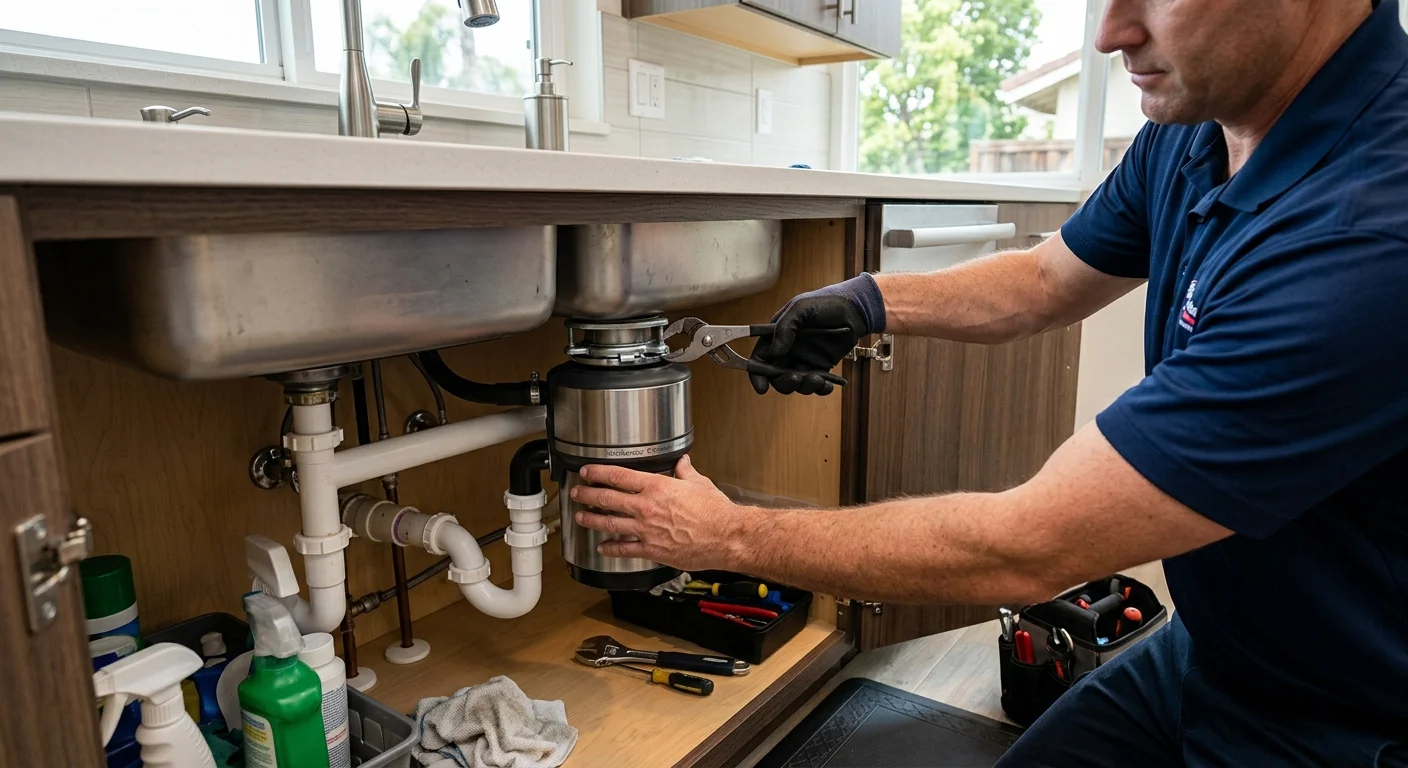
A jammed disposal stops the sink from draining. A leak under the cabinet can damage the floor. Record whether it hums, sits dead, or drips, and where the first drop forms. Repair Pro San Diego matches independent technicians. We do not stock replacements or promise a one-visit finish.
Common garbage disposal problems San Diego homeowners see
Most disposals in San Diego homes are continuous-feed units. The symptom is a clue, not a confirmed cause.
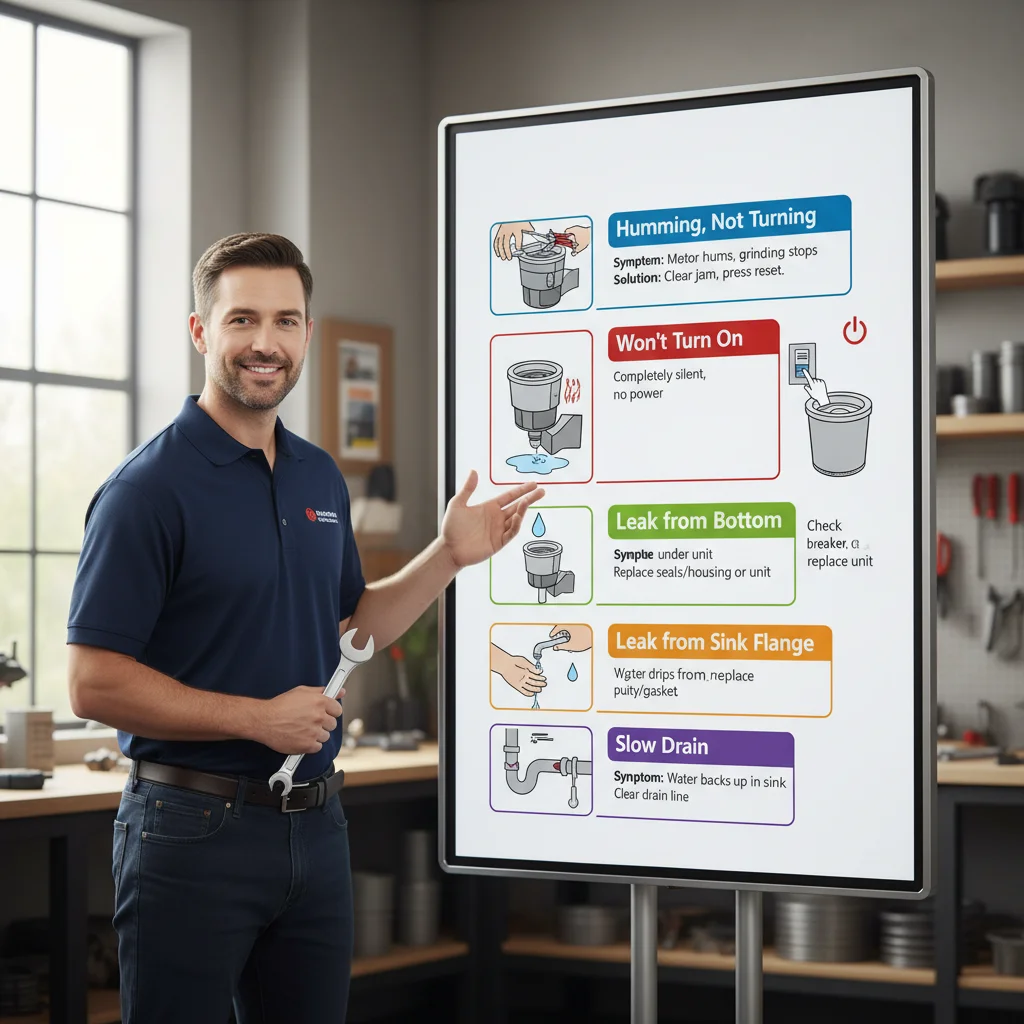
A unit that hums but will not spin is often a jam. Do not keep flipping the switch. A totally dead unit can be the reset, breaker, switch, or motor. The technician confirms which.
Leaks show up in three spots, and the spot is worth recording. Water at the top can involve the sink flange. Water at the dishwasher hose can involve that inlet. Water dripping off the bottom of the housing can mean an internal seal or a cracked body. See garbage disposal leaking from the bottom.
Last is the slow-drain complaint, where the disposal grinds fine but the sink backs up. That’s usually a clog in the discharge tube or P-trap below the unit, not the disposal itself. Grease and ground food cool and harden in the trap. The matched technician can clear the trap and discharge elbow, then check whether oversized debris is packing a 1.5-inch line.
Humming but not turning: how we clear a jam safely
When your garbage disposal hums but doesn’t grind, it’s likely jammed. You’ll hear the motor trying to work, but the grinding plate can’t move. The first step for many homeowners is to hit the reset button, located on the bottom of the unit. This often trips if the motor overheats from trying to grind something too tough. If the reset button doesn’t work, the jam is still physically present.
Never reach into the chamber, even with the switch off. The impellers are blunt but the lugs and the grind ring will cut you, and a wall switch can get bumped. Instead, find the hex socket on the underside of the disposal. It takes a 1/4-inch Allen wrench, and most units ship with one clipped to the side. Insert it and crank back and forth until the plate breaks free and spins by hand. Then fish out the object with tongs, flip the wall switch back on, press the red reset button, run cold water, and start it.
If the wrench won’t budge the plate, the object is wedged deep or the motor has seized. The tech pulls the unit, opens the chamber, and clears it without chewing up the impellers. Coffee grounds, eggshell membranes, and potato peels can pack a grind chamber. Those are possible jam materials, not a ranked San Diego list. The tech will tell you which one it was so it doesn’t happen again next week.
Leaks from the bottom vs the sink flange
The first thing a tech does with any leak is dry everything off and run the unit while watching where the first drop forms. Water tracks down and pools at the bottom no matter where it starts, so the bottom of the housing isn’t always the source. That traces to one of four points.
The sink flange at the top is the most common and the easiest fix. That’s the metal ring that seats the disposal into the drain hole. The old plumber’s putty hardens and cracks, or the three mounting screws on the snap ring back off. The tech drops the unit, scrapes the old putty, lays a fresh bead, and re-torques the mount. Done right, that seal lasts years.
The dishwasher inlet is the side nipple where the dishwasher drain hose clamps on. A loose hose clamp or a brittle hose drips here every time the dishwasher cycles, which makes it look intermittent. The tech swaps the clamp or the hose. The drain elbow is the discharge fitting on the lower side, where a flat fiber gasket and a bolted flange connect to the P-trap. That gasket flattens out over time. New gasket, snug the bolts evenly, and it’s sealed.
A leak from the bottom of the housing itself is the bad one. That means the internal seal around the motor shaft has failed or the body has cracked from corrosion. There’s no gasket to swap on the inside of a sealed unit. When the bottom leaks, the disposal is done, and replacement is the call. Either way, it’s worth fixing fast because cabinet bases soak up water and grow mold quickly. This is everyday garbage disposal repair work for the techs in our network.
When a disposal is worth repairing vs replacing
Repair versus replace depends on the diagnosed fault and the written quote. There is no approved 8-15 year disposal lifespan on this site. Clearing a jam, reseating a flange, or swapping a hose can bring a sound unit back. A burned motor or a cracked body often means replacement after that diagnosis. We do not decide that before the technician has seen the unit.
One thing techs always check on a dead unit before condemning the motor: the circuit. A disposal should be on its own dedicated circuit, or at least a switched line that isn’t sharing a tripped breaker with the dishwasher. Techs have found plenty of “dead” disposals in older San Diego kitchens, in places like North Park and La Mesa, that were just a flipped breaker or a failed wall switch. They test the power before ever blaming the appliance. If you’re pricing a swap, our post on garbage disposal installation cost in San Diego breaks down what goes into it.
Garbage disposal service across San Diego County
A dead disposal or an active leak is urgent for the kitchen. It is not guaranteed priority intake. Leave a voicemail at (858) 988-7787 and ask the matched technician about timing.
Technicians cover San Diego County. Parts on the truck belong to that provider. Do not count on a stocked 1/2 or 3/4 horsepower replacement or a first-visit finish. You get a quote in writing before work starts.
Before any work starts, the tech tells you what failed and what the fix is, so you decide with the facts in front of you. You get a quote in writing, and warranty terms come from the tech who does the work, so ask before you approve it. Humming jam, dead unit, or a leak you can’t pin down, that’s everyday garbage disposal repair work for the techs in our network.
Frequently asked questions
Why is my garbage disposal humming but not grinding?
A hum with no spin almost always means a jam. A bone fragment, fruit pit, or piece of broken glass is wedged between the impeller lugs and the grind ring, stalling the plate while the motor stays energized. Stop flipping the switch, because repeated tries overheat the windings. Use a 1/4-inch Allen wrench in the hex socket on the bottom of the unit to break the jam free, then fish the object out with tongs.
What does it mean when my disposal is completely dead with no sound at all?
A totally dead disposal with no hum points to a power problem, not a mechanical one. Check the red reset button on the bottom of the unit first, then check the circuit breaker. A bad wall switch or a failed motor are the next two causes. The technicians in our network test the circuit before condemning the motor, because plenty of “dead” disposals in older San Diego homes are just a flipped breaker.
When is a garbage disposal worth repairing instead of replacing?
Jams, flange leaks, hose swaps, and gasket work can be worth doing after diagnosis. Motor and housing failures often lead to replacement. There is no approved 8-15 year lifespan figure. Use the written quote.
How does dispatch work for a disposal repair in San Diego?
Leave a voicemail with the symptom and city. Repair Pro San Diego does not flag priority dispatch or stock replacement units. The matched technician sets timing, parts, and the written quote.
When to call us
Clear a simple jam with the Allen wrench yourself. But a bottom leak, a unit that’s totally dead after you’ve checked the reset and the breaker, or a burning smell means stop and call. Those point to a failed seal, bad wiring, or a cooked motor, and forcing them makes the bill bigger. Call us at (858) 988-7787 and we’ll match you with a local tech.