A freezer that quits puts a lot of food at risk fast. A full chest freezer holds weeks of meat and frozen meals. Once the interior climbs past 0 degrees, that food starts to soften and spoil. Most freezer failures show up as one of three things. The box goes warm. Frost piles up on the walls. Or it starts making a noise it didn’t make before. Each one points to a different part, and catching it early usually means a smaller repair.
Common freezer problems in San Diego homes
We see the same handful of freezer failures across San Diego County, week after week. The fix depends on the part, so here’s what each symptom usually means.
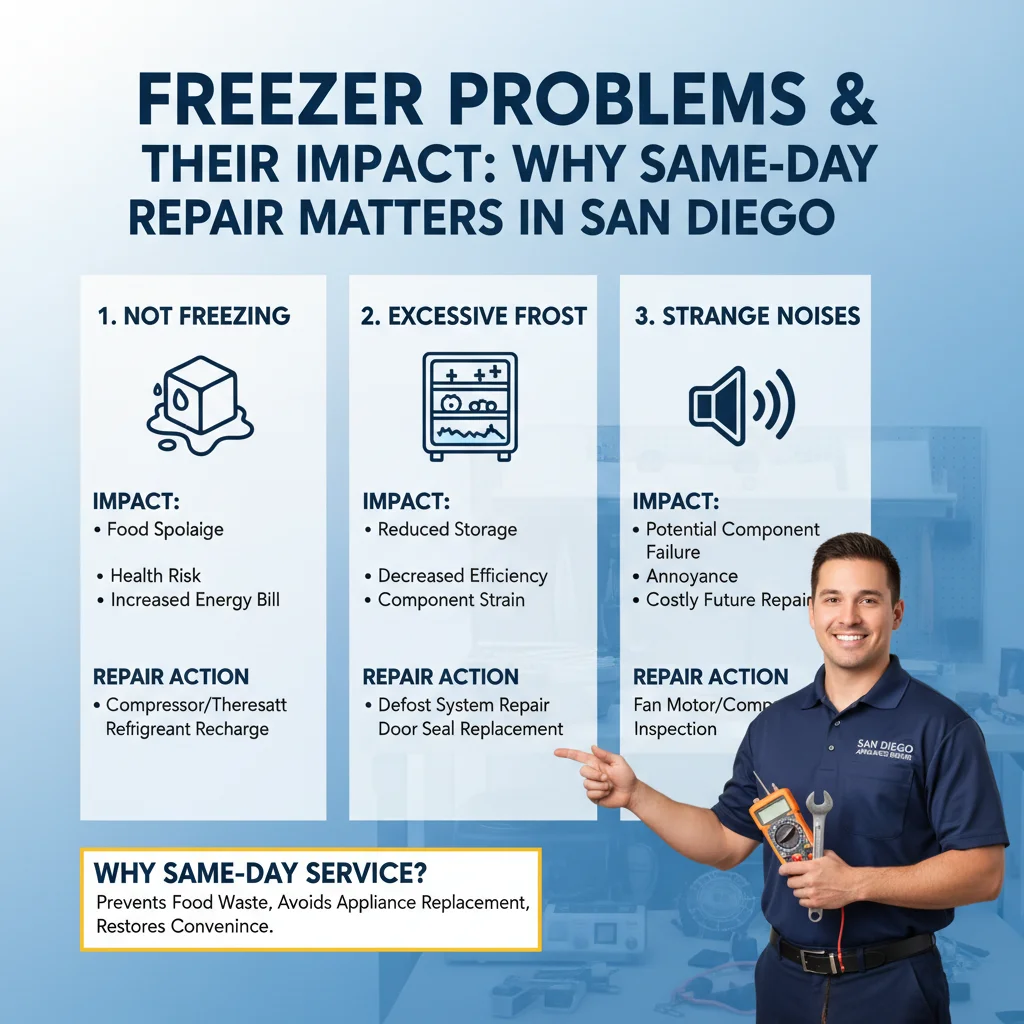
A freezer that won’t get cold enough is the call we get most. On a frost-free upright or fridge-freezer, it’s often the evaporator fan. That fan pushes cold air off the coils into the box, and when its motor seizes, the coils freeze solid while the rest of the freezer goes warm. Pull the back panel and you’ll see a wall of ice over the coils. Other times it’s the defrost system. A failed defrost heater, timer, or thermostat lets frost choke the coils until no air gets through. On a chest freezer there’s no fan, so a warm box usually points to the compressor or a refrigerant leak. Both need a qualified tech with the right tools.
Heavy frost is its own problem. A thin layer is normal. Thick sheets of ice on the walls or the back panel mean the defrost cycle isn’t running. The defrost heater is supposed to melt that frost a few times a day, and when the heater, sensor, or timer dies, the ice just builds. The other cause is a door gasket that’s gone hard or torn. San Diego’s coastal humidity makes this worse. Every time the door opens near the coast, damp marine air rushes in, hits the cold metal, and turns straight to frost. Garages in Chula Vista, Encinitas, and Coronado see this faster than inland homes.
New noises mean something’s wearing out. A steady hum is normal. Grinding or a loud whir usually traces to the evaporator fan or the condenser fan, often because ice is hitting the blade or the bearing is shot. Clicking every few minutes can be the start relay trying and failing to kick the compressor on. A loud knock or buzz from the bottom is the compressor itself laboring. Leaks point to a clogged defrost drain backing up, or a cracked water line if the unit has an ice maker. When you need freezer repair in San Diego, the techs we match run these checks on the first visit.
Is your freezer not freezing, frosting up, or making noise?
Here’s how to read each symptom before you call, so you can tell us what you’re seeing.
If your freezer isn’t freezing and the food’s gone soft, check a few things first. Make sure the box isn’t packed so tight that air can’t move. Pull it out and look at the condenser coils underneath or behind. If they’re caked in dust and pet hair, the compressor runs hot and loses cooling. That’s a clean you can do yourself. If the coils are clean and it still won’t freeze, it’s likely the evaporator fan, the compressor, or a sealed-system leak, and that’s where we come in. One more San Diego note: a garage freezer can quit on a cold winter night. When the garage drops below 50 degrees, the thermostat thinks it’s already cold enough and never tells the compressor to run, so the food thaws.
Heavy frost makes the freezer work harder and eats into your storage space. Start with the door. Run your hand around the gasket while the door’s shut and feel for cold air leaking out, and look for tears or spots where the seal has gone stiff. A bad gasket lets humid air pour in and frost over everything, and near the coast that happens fast. If the gasket’s fine, the defrost system is the next suspect. A dead defrost heater or sensor means the frost never melts off and just keeps stacking. If your unit keeps frosting over, our post on why a freezer is frosting up walks through the causes in more detail.
Strange noises tell you a part is wearing out. A low steady hum is fine. Grinding or a loud whir is usually the evaporator fan or condenser fan, often because ice is rubbing the blade or a bearing is failing. A click that repeats every few minutes is the start relay struggling to fire the compressor. A heavy knock or buzz from the bottom is the compressor itself. Don’t wait on compressor noise. A failing compressor can take the whole sealed system with it, and that’s the priciest repair on the box.
Upright, chest, and drawer freezer brands the network covers
The three freezer styles in San Diego homes each fail in their own way. Chest freezers live in garages and run on a simple cold-plate or coil system with no defrost cycle, so frost has to be scraped by hand and a warm box almost always means the compressor or a leak. Upright freezers are frost-free, with an evaporator fan and a defrost heater, so they fail more like a fridge does. Built-in drawer units, common in newer kitchens around Carmel Valley and 4S Ranch, pack the same parts into a tight cabinet, which makes access slower and the diagnosis fussier.
The network covers all the major brands: Whirlpool, Kenmore, GE, LG, Samsung, Frigidaire, and Maytag. Techs in our network also handle the high-end built-ins like Sub-Zero, Viking, and Thermador, which run dual sealed systems and electronic boards that need brand-specific diagnostics. LG and Samsung tend toward sealed-system and inverter board faults. The older Whirlpool and Kenmore units usually fail at the defrost heater or the start relay. Knowing the brand’s weak point lets the technician head straight to the likely cause.
Whether it’s chest freezer repair San Diego for the garage unit or upright freezer repair for the one in the kitchen, the techs in our network carry the parts that fail most: defrost heaters, thermostats, fan motors, start relays, and gaskets. That stock lets the technician finish a lot of repairs on the first visit instead of ordering a part and coming back. If a brand-specific board or a sealed-system part has to be sourced, the technician will tell you up front and give you a timeline.
What to expect from our freezer repair process
Here’s exactly how a freezer call goes once you reach us. No mystery, no runaround.
It starts with a voicemail. Tell us what the freezer’s doing, warm, frosting, or noisy. If the box is completely warm, say so in the message. When the food’s already thawing, move what you can to a neighbor’s freezer or a cooler with ice while you wait. Arrival times vary. The matched technician sets the window, brings diagnostic tools, and quotes in writing before any work starts.
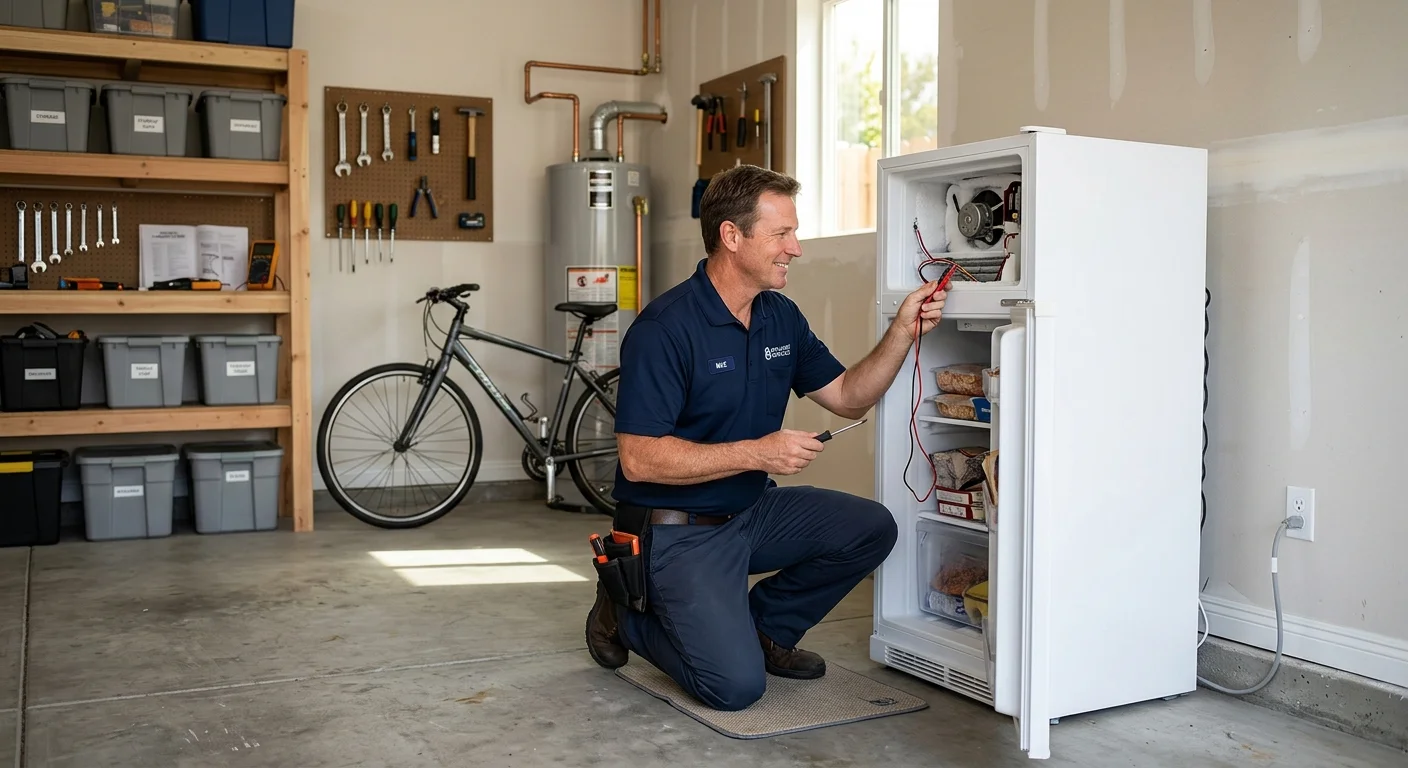
The diagnosis comes first. The tech pulls the unit out, checks the door seal, and reads the temperature in the box. On a frost-free model that means pulling the back panel to look at the coils and the evaporator fan, then testing the defrost heater, thermostat, and start relay with a meter. On a chest freezer it’s a compressor and sealed-system check. Once the tech finds the cause, you get a clear explanation and an upfront written estimate before any work starts.
After you approve it, the repair happens right then if the part’s on the truck. The tech swaps the failed part, runs the freezer back down to temperature, and confirms it holds before leaving. You’ll also get a couple of plain tips, like cleaning the condenser coils once a year and keeping the gasket clean, to push off the next failure. For a unit that isn’t built into the kitchen, this is the same standalone freezer repair we run every week.
How much does freezer repair cost in San Diego?
Freezer repair cost comes down to one thing: which part failed. We can’t give a real number until a tech sees the unit, but here’s what drives it so you know what to expect.
The cheap repairs are the wear parts. A door gasket, a thermostat, a start relay, or a defrost heater are inexpensive parts and quick to swap, so the labor stays low. The middle of the range is a fan motor or a control board. The expensive end is anything in the sealed system: a compressor or a refrigerant leak. Those need a qualified tech, specialized tools, and EPA-handled refrigerant, and on a high-end built-in the part itself can be hard to source. Brand matters here. A common Whirlpool part is cheap and on the truck, while a Sub-Zero or Samsung board is a special order.
Ask the technician about their diagnostic fee and whether it’s credited toward the repair. You get a written estimate before any work starts. The honest call is that a sealed-system repair on an older unit sometimes costs more than the freezer’s worth, and we’ll tell you straight when repair doesn’t make sense and replacement is the smarter move. Before you hire any appliance repair company, check their registration with the California Bureau of Household Goods and Services (BHGS) at bhgs.dca.ca.gov.
Frequently asked questions
Why is my freezer not getting cold enough?
On a frost-free upright or fridge-freezer, a seized evaporator fan motor is the most common cause. The fan pushes cold air off the coils, and when it fails the coils freeze solid while the rest of the freezer warms. A failed defrost heater, timer, or thermostat can also let frost choke the coils until no air gets through.
What causes thick frost to build up on the freezer walls?
A failed defrost system is the most common reason. The defrost heater is supposed to melt frost off the evaporator coils several times a day, and when the heater, sensor, or timer dies, ice just keeps stacking. A torn or hardened door gasket is the other main cause, especially near the coast where marine-layer humidity pours in every time the door opens.
Is it normal for a garage chest freezer to stop running in cold weather?
This is a real San Diego problem. When a garage drops below about 50 degrees, the thermostat on many chest freezers thinks it’s already cold enough and never signals the compressor to run, so food can actually thaw. It’s a thermostat design issue, not a mechanical failure, but it does require a fix if the freezer lives in an unheated garage.
How much does freezer repair cost in San Diego?
Cost depends almost entirely on which part failed. Wear parts like a door gasket, defrost thermostat, or start relay are inexpensive parts and quick to swap. A fan motor or control board sits in the middle range. Sealed-system work (compressor or refrigerant leak) is the most expensive category and requires a qualified technician with EPA-certified handling of refrigerants. Ask the technician about their diagnostic fee and whether it’s credited toward the repair.
When to call us
If the box is warm and the food’s softening, don’t wait it out. A freezer that thaws can spoil weeks of food in a day, and a small fault like a stuck defrost timer turns into a frozen-up compressor when it’s ignored. Warm interior, heavy frost, a new grinding noise, or water on the floor all mean it’s time for a real diagnosis. When the food’s at risk, our emergency appliance repair covers it. Call us at (858) 988-7787 and we’ll match you with a technician.