Your walk-in is creeping up to 50 degrees during a Friday dinner rush, and the product inside is on a clock. Every minute the box stays warm is product you might have to toss and a health-code line you’re getting close to crossing. That’s the moment most San Diego operators call us, and it’s the moment a correct diagnosis matters most.
We match San Diego operators with insured, independent local technicians who handle commercial appliance repair across the county, from kitchens in Oceanside to markets in Chula Vista. Here’s what typically fails, why downtime is so expensive in food service, and what a real service call looks like.
Common failure points
Most commercial refrigeration failures trace back to a handful of parts. The compressor is the heart of the system, and when it fails or short-cycles, the box won’t hold temperature no matter how long it runs. A dirty or failing condenser coil makes the unit work harder, overheat, and eventually quit, and in a San Diego kitchen the grease and dust load builds up fast.
Evaporator problems show up as ice buildup, weak airflow, or a box that cools unevenly. Defrost faults (bad timer, heater, or sensor) let frost smother the coil until cold air can’t move. Door gaskets are the quiet killer. A torn or hardened gasket bleeds cold air all day, spikes your energy bill, and stresses the compressor until something bigger breaks.
Then there’s the sealed system. Low refrigerant from a leak, a blocked metering device, or a failed valve all need certified diagnosis and repair, not a guess. We cover all of it, the same parts and systems we walk through in our refrigerator repair work, just scaled to commercial equipment.
Why downtime is urgent in food service
Refrigeration downtime in a restaurant isn’t an inconvenience, it’s a countdown. The FDA Food Code sets cold holding at or below 41°F. Once your product climbs past that and stays there, the safe window starts closing, and county health inspectors don’t grade on effort. Product held too long in the danger zone has to go.
The math is brutal. A full walk-in can hold thousands of dollars of inventory. Lose it once and the repair bill looks small by comparison. Add a closed kitchen, comped tables, and a reputation hit, and a single afternoon of downtime can cost more than a year of maintenance. That’s why the priority on every commercial call is to stabilize the box and protect what’s inside, then get to the root cause.
Walk-in, reach-in, and prep-table specifics
These units fail differently, so the diagnosis looks different for each.
Walk-in coolers and freezers usually live with the condensing unit on the roof or out back, away from the box. That split design means a temperature problem can sit in the box, the lines, or the remote unit, and finding it takes a tech who knows where to look. Door closers, heated frames, and freezer floor heaters all matter here too.
Reach-ins and undercounters are tighter, self-contained units that pack a full system into a small footprint. They overheat when crowded against a wall or starved for airflow, and their compact condensers clog fast in a busy kitchen. Fan motors and door hinges take a beating from constant line use.
Prep tables (sandwich and pizza prep units) have to hold pans at safe temperature while the lid stays open for hours during service. They’re sensitive to airflow and overpacking, and a warm prep table is a direct health-code exposure. Glass-door merchandisers in markets and cafes add display lighting, anti-sweat heaters, and constant door cycling, all of which stress the system in ways a back-kitchen box never sees.
Sealed-system and refrigerant work
When the problem is refrigerant, the rules change. Sealed-system work means opening the closed loop that carries refrigerant through the compressor, condenser, and evaporator, and that’s regulated. The technicians we match for this work are EPA 608 certified, the federal requirement for anyone handling refrigerant. That certification covers finding leaks, recovering refrigerant properly, repairing or replacing the failed component, and recharging to spec.
This is also where guesswork gets expensive. Throwing refrigerant at a leak without finding it wastes money and violates EPA rules. A qualified tech pressure-tests, locates the actual leak, and fixes it. Sealed-system and compressor jobs cost more than a typical service call, and the matched technician quotes them in writing before any work starts.
Emergency calls and intake
Food service doesn’t keep banker’s hours, and a failing compressor won’t wait for Monday. If product is on the line, say so in the voicemail. Arrival times vary and we don’t promise one. The matched technician sets timing after reviewing the request.
If you run a restaurant, market, or property-managed building near the coast, we cover your area, from Oceanside down through the city and into the South Bay. Call (858) 988-7787, tell us what the box is doing, and we’ll match you with a tech.
What a service call covers and rough costs
Ask the technician about their diagnostic fee and whether it’s credited toward the repair. Get a clear read on what failed, why, and what the fix costs, in writing, before any work starts.
Commercial refrigeration costs swing widely based on the job. Smaller fixes, a gasket, a fan motor, a thermostat, land toward the low end. Sealed-system and compressor jobs cost more because the parts are pricier and the labor is regulated. Brand tier, access difficulty, and whether the sealed system has to be opened all move the number. The matched technician diagnoses first and quotes in writing before any work starts, so you’re working from real numbers, not a guess. Ask whether the parts are factory-authorized, since that matters for equipment running under constant commercial-duty stress.
When to repair vs. replace
Repair is almost always the right move when the unit is under ten years old, the cabinet and door frames are solid, and the failure is a single component. A compressor or condenser swap on a sound box beats the cost and lead time of a new unit every time.
Lean toward replacement when the cabinet is rusting through, the box can’t hold temperature even after repair, or you’re stacking up repeated failures on a tired unit. An old merchandiser that fails every season is costing you more in product and service calls than a new one would. We’ll tell you straight which side of that line you’re on, because keeping a dying box alive doesn’t serve you.
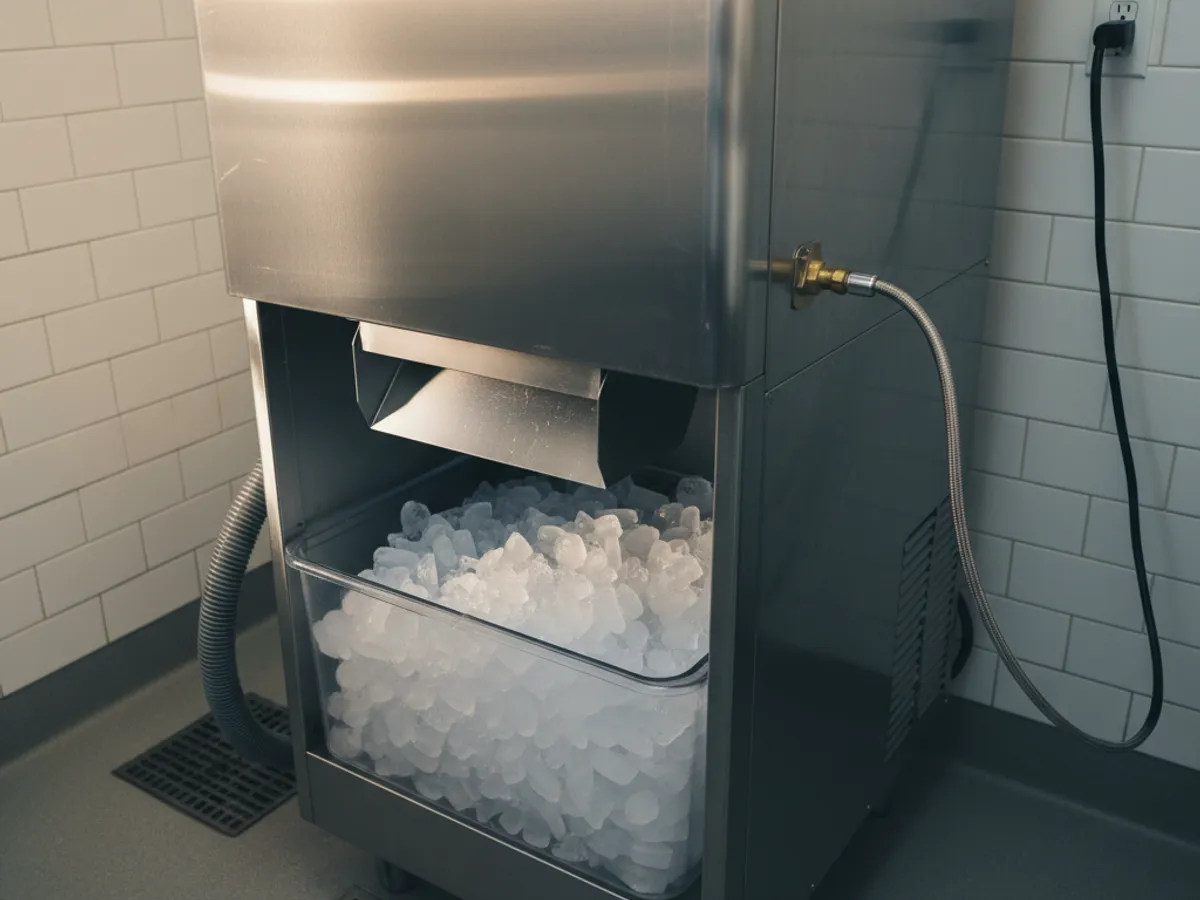
If your ice machine is the issue rather than the cold box, that’s its own system with its own failure points. We cover those too in our ice maker repair work, and we wrote a separate guide on commercial ice machine repair in San Diego worth a read. For freezer-specific failures, our freezer repair guide breaks down what’s usually going wrong.
Frequently asked questions
How fast can you get to a commercial refrigeration emergency? Leave a voicemail at (858) 988-7787, describe the symptoms, and say if product is at risk. We match you with a local tech covering your area. The matched technician sets timing.
Is the diagnostic fee credited toward the repair? That depends on the technician. Ask about their diagnostic fee and whether it’s credited toward the repair before they start the visit.
Are the technicians certified to work on refrigerant systems? The technicians we match for sealed-system work are EPA 608 certified, the federal requirement for handling refrigerant. Ask about factory-authorized parts when you get your quote.
Why is my walk-in not holding temperature? The usual suspects are a dirty condenser coil, a failing compressor, a frosted-over evaporator from a defrost fault, or worn door gaskets bleeding cold air. It can also be low refrigerant from a leak. A proper diagnosis tells you which, and that’s exactly what a commercial appliance repair visit is for.
Do you work with property managers and multi-unit operators? We do. We cover restaurants, markets, cafes, and property-managed buildings throughout the county. Sealed-system and compressor jobs get quoted in writing by the matched technician, so you can approve repairs with clear numbers.