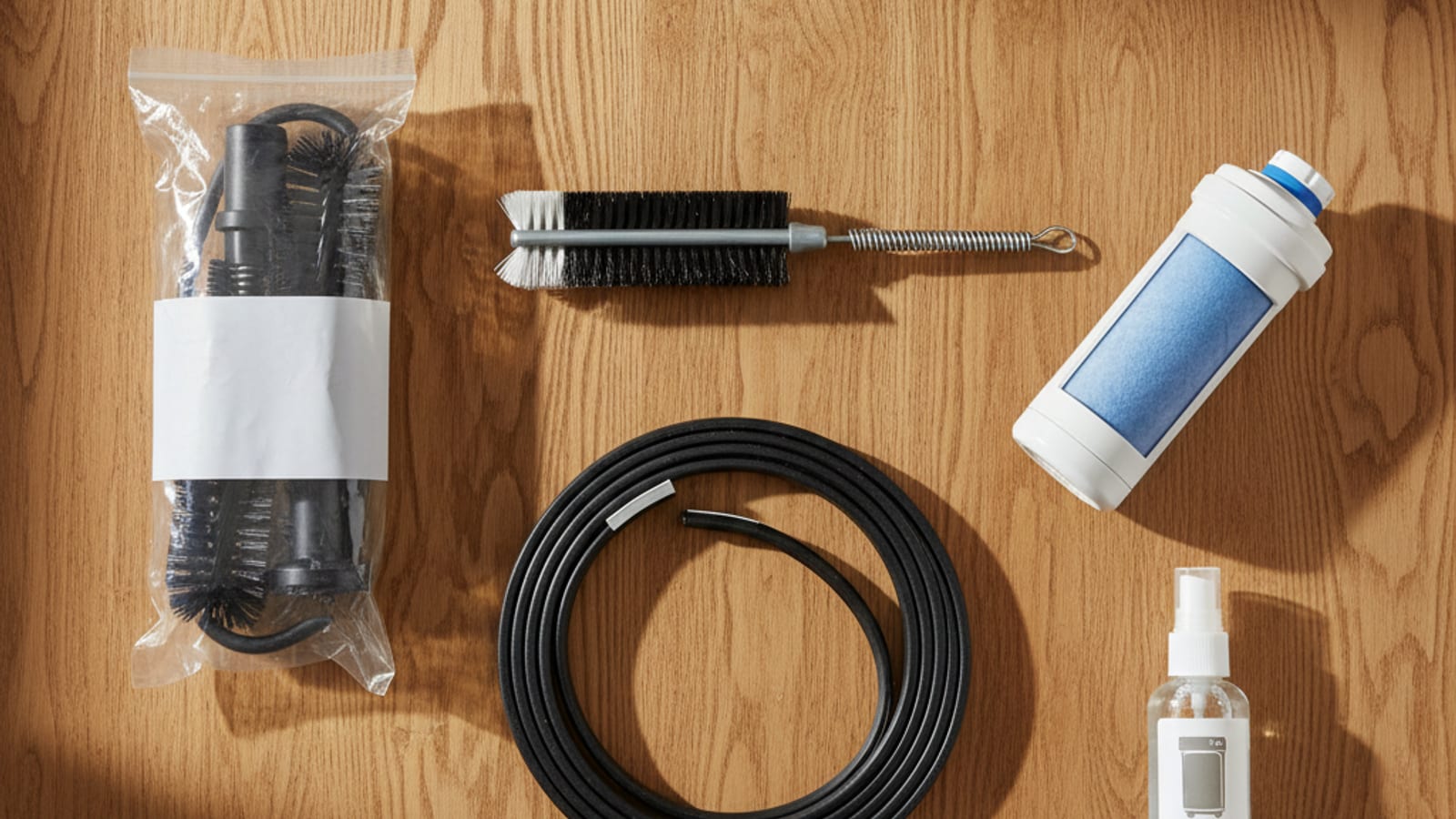
Most San Diego homes have a mix of appliances in a mix of micro-climates. This page is a season-by-season checklist: spring coil cleaning, summer heat checks, fall dryer and gas-leak response, and winter defrost notes. If you see, hear, or smell signs of a gas leak, leave immediately and call 911 or SDG&E at 1-800-411-7343.
Here’s the checklist we give customers who ask “what should I be doing?”
Spring, April through May
The goal: prep appliances for the warm-weather season when cooling and ventilation matter most.
Refrigerator
- Clean the condenser coils (bottom rear on most modern fridges). Dust-coated coils force the compressor to work harder as ambient kitchen temps rise. A coil brush from a hardware store is the usual tool.
- Check the door gasket. Close the door on a dollar bill, if it slides out easily, the seal needs replacement.
- Replace the water filter if you have an ice maker or water dispenser. Every 6 months regardless.
Dryer
- Clean the full vent line. Lint builds up through winter; summer brings hotter laundry loads. Clogged vents are a fire hazard.
- Inspect the vent hose for tears or kinks. If it is thin plastic flex, ask a technician whether a listed metal replacement is appropriate.
- Leave gas connections to a qualified professional. If you see, hear, or smell signs of a leak, leave immediately and call 911 or SDG&E at 1-800-411-7343.
Outdoor fridges and ice makers
- Check water line connections for slow leaks. Winter-to-spring temperature swings can loosen compression fittings.
- Clean outdoor unit exteriors, pollen, dust, and cobwebs block airflow on outdoor-rated fridges and ice makers.
Garage-installed appliances
- Everything above applies doubly to garage appliances, they see the widest temperature swings and the most dust.
Summer, June through August
The goal: survive the hot months without emergency calls. East County and inland communities see the highest appliance stress June-September.
Refrigerator (especially garage fridges)
- Don’t overpack. Air needs to circulate around items. An over-stuffed freezer, especially, can’t stay cold.
- Check the temperature weekly. Keep the fresh-food compartment at or below 40°F and the freezer at or below 0°F, per FDA food-safety guidance. Check temps more often in hot spells, since marginal units drift higher in summer heat.
- Listen for the compressor. If it’s running constantly (no on/off cycling), the unit is struggling with the heat, usually because of coil dust or a weakening compressor.
Ice makers
- Expect higher demand, use rotates faster. Follow the manufacturer’s filter interval and check the filter more often in summer, since heavy use shortens its life.
- Watch for slow production. If the ice bin doesn’t fill, the water valve is weakening or the fill tube is partially frozen.
Dishwasher
- Check inlet valve water pressure. Summer water usage in San Diego drops neighborhood pressure slightly, if your dishwasher takes forever to fill, that’s why.
Wine coolers and beverage centers
- Verify ventilation clearance. Cabinets with blocked vents (towels stacked above, etc.) cause compressor overheating. Leave 2+ inches around the unit.
Fall, September through November
The goal: transition to cooler weather and pre-winter maintenance on heating-related appliances.
Dryer
- Inspect the vent line one more time. Fall’s a good second checkpoint before winter starts heavier laundry cycles.
- Clean the lint filter housing. Not just the filter itself, the cavity the filter sits in. Vacuum with a crevice tool. You’ll be surprised what accumulates down there.
Gas ranges and gas dryers
- Leave gas connections to a qualified professional. If you see, hear, or smell signs of a leak, leave immediately and call 911 or SDG&E at 1-800-411-7343.
- Treat possible leaks as emergencies. If you see, hear, or smell signs of a gas leak, leave the area immediately. Call 911 or SDG&E at 1-800-411-7343 from a safe location. See SDG&E’s gas-appliance safety guidance.
All appliances
- Check cord and outlet condition. If any plug feels warm to the touch during operation, the outlet is failing, that’s an electrical hazard, not an appliance issue, and needs attention.
Winter, December through March
The goal: mild maintenance season. Most appliances run easier in winter, focus on small checks and plan any upgrades.
Refrigerator and freezer
- Listen for defrost cycle operation. You should hear a soft pop/crackle occasionally as the defrost heater runs. If you never hear this and frost is building up, the defrost system has failed.
Washer
- Check supply hoses. Inspect rubber hoses for cracking, bulging, or brittleness and replace them when you see wear or on the manufacturer’s schedule; winter’s a good time because hose supply valves are usually easier to access when you’re not sweating.
- Clean the door gasket (front-loaders). Mildew builds through winter when loads tend to be colder. Wipe the rubber seal with a bleach-diluted cloth monthly.
Dishwasher
- Run a monthly hot-water cleaning cycle with a dishwasher cleaner packet. Winter produces less evaporation in the dishwasher, letting scale and grime build up on internal surfaces.
Holidays, extra load testing
- If you host Thanksgiving or December holidays, your kitchen appliances get stress-tested. A dishwasher that marginally worked all year often fails the first time you run four cycles in one day.
Monthly habits (every month, all year)
- Wipe the microwave interior. Splatter buildup causes arcing on the waveguide cover, which is a real fire hazard.
- Clean the dishwasher filter. Five minutes. Remove, rinse, replace.
- Wipe the refrigerator door gasket and inspect for tears.
- Run the hot-water faucet at the sink closest to the dishwasher for 30 seconds before starting a cycle, primes the dishwasher with hot water.
- Clean the dryer lint filter before every load. Yes, every load.
The single highest-value maintenance task
If you only do one thing: clean the dryer vent line annually. It’s the only maintenance task where skipping it creates a real fire risk, not just a performance issue.
When maintenance uncovers a problem
Coil cleaning and vent checks can surface a fridge that is running warmer than usual, or a dryer that feels hotter than it should. Repair Pro San Diego does not run a shop and does not publish a share of service calls.
Frequently asked questions
How often should I clean my dryer vent in San Diego?
Once a year is the minimum, and twice is better if you run heavy laundry loads through the summer months. A clogged vent is a fire hazard, not just a performance issue. Spring is the right time for the main cleaning because lint accumulates through winter. Fall is a good second checkpoint before heavier winter cycles start.
Why do refrigerators in San Diego garages need extra maintenance?
Garage refrigerators see the widest temperature swings in the county, reaching 100°F or more in East County and inland communities during summer. Heat forces the compressor to run harder, so dust-coated condenser coils become a serious problem. Clean them every spring, check the temperature weekly in summer, and listen for a compressor that runs without cycling off. That’s the early warning sign of a unit struggling with the heat.
What is the single highest-value appliance maintenance task?
Cleaning the dryer vent line annually. Every other task on this list affects performance or efficiency. A blocked dryer vent creates a real fire risk. It takes about 30 minutes with a vent cleaning kit and it’s the one task where skipping it has consequences beyond a shorter appliance lifespan.
When is the best time to replace a refrigerator water filter in San Diego?
Follow the manufacturer’s interval as your baseline, and check the filter more often if you run the ice maker heavily in summer. San Diego’s warm climate means higher ice demand from June through August, which pushes more water through the filter faster. A spring check and a late-summer check make a simple rule.
If you notice anything off during your seasonal check, book a diagnostic. The refrigerator is often the first appliance to show early warning signs, and the techs in our refrigerator repair network diagnose and quote in writing. Parts on the truck are the provider’s. Ask about the diagnostic fee and whether it’s credited toward the repair.
North County homeowners can request a match for appliance repair in Carlsbad. Leave a voicemail at (858) 988-7787.