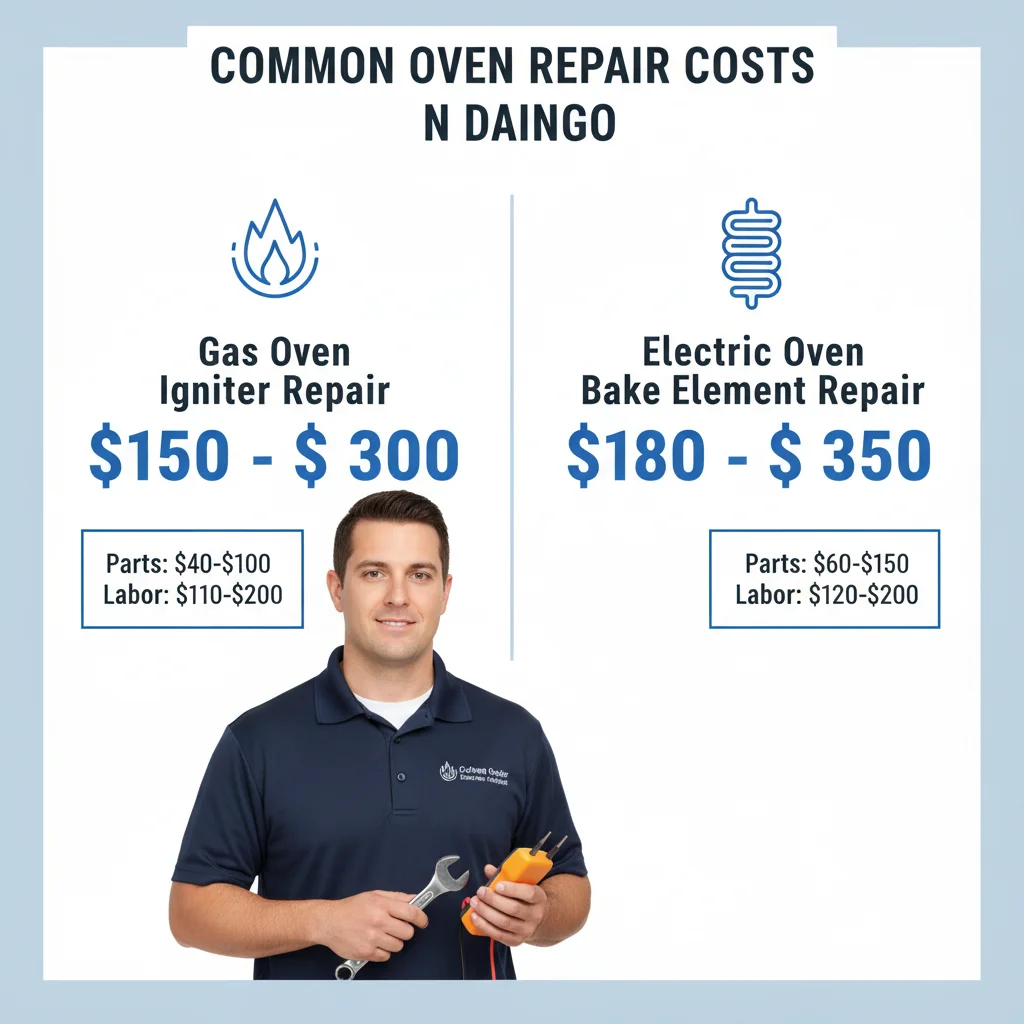
When your oven stops working, the immediate question is often, “How much will this cost to fix?” In San Diego, appliance repair prices can vary depending on the type of oven, the specific problem, and the parts needed. Getting a clear understanding of potential costs helps you make an informed decision.
What drives the cost of an oven repair
What you pay for an oven repair in San Diego depends on the part that failed, how much labor it takes to access and replace it, and whether the technician is already diagnosing another issue while on-site. A simple part swap on an accessible component costs far less than a job that means pulling a built-in unit from the wall or working around a tight gas line. High-end and built-in models generally run higher than a standard freestanding range, since the parts themselves cost more and the labor takes longer.
Ask the technician about their diagnostic fee and whether it’s credited toward the repair. Most visits start with the technician coming out, diagnosing the issue, and providing a written estimate before any work begins. You can learn more about general appliance repair costs in our detailed guide on appliance repair cost in San Diego. Whether you have a gas range or an electric wall oven, a reliable repair can often extend its life significantly, saving you the expense of a full replacement. For more on the repair itself, see our guide to oven repair in San Diego and the surrounding areas.
Price factors: gas vs. electric, parts, and labor
Several key factors influence the final price of your oven repair. Understanding these can help you anticipate the estimate.
Gas vs. electric ovens
Generally, repairs for gas ovens can sometimes be slightly more expensive than electric ovens, primarily due to the specialized nature of gas components. Gas ovens often involve igniters, gas valves, and safety mechanisms that require specific expertise and parts. Electric ovens, on the other hand, typically deal with heating elements, temperature sensors, and control boards. While electric components can also be costly, the labor involved with gas lines can sometimes be a bit higher to ensure absolute safety. Both types of ovens have unique parts and repair procedures.
Cost of parts
The biggest variable in any repair is often the cost of the replacement part. OEM (Original Equipment Manufacturer) parts tend to be more expensive but offer better compatibility and longevity. Aftermarket parts might be cheaper but can sometimes compromise performance or lifespan. A basic thermostat sensor costs far less than a main control board for a smart oven, since the board is a more complex, higher-failure-risk component. Techs in our network aim to source quality parts that balance cost-effectiveness with reliability.
Labor rates
Labor accounts for a significant portion of the repair cost. This covers the technician’s time, expertise, and travel to your San Diego home. The complexity of the repair directly impacts labor time. A quick part swap might take an hour, while diagnosing an intermittent electrical issue or disassembling a built-in oven could take several hours. Labor rates vary by technician, which is another reason to get the estimate in writing before work begins.
What affects cost for common oven problems (igniter, bake element, thermostat)
Here’s what affects cost for the most frequent oven malfunctions, and why one job runs more than another.
Oven not heating (igniter or bake element)
If your oven isn’t heating at all, or not heating properly, the culprit is often either the igniter (for gas ovens) or the bake element (for electric ovens).
- Gas Oven Igniter Replacement: A faulty igniter prevents the gas from lighting, leaving your oven cold. The igniter itself is a relatively inexpensive part, so most of the cost is labor, which covers safely installing it and testing the gas flow afterward.
- Electric Oven Bake Element Replacement: For electric ovens, a broken bake element means no heat. The element is not an expensive part, and it’s easy to access on most models, which keeps labor time down. This is a common and relatively straightforward repair.
Inaccurate temperature (thermostat or temperature sensor)
When your oven’s temperature is inconsistent or simply wrong, it often points to a problem with the thermostat or a temperature sensor.
- Thermostat or Temperature Sensor Replacement: A malfunctioning sensor sends incorrect temperature readings to the control board, leading to undercooked or overcooked food. Cost depends on the sensor’s complexity: a basic sensor is a simple, lower-cost swap, while a more advanced thermostat assembly takes longer to access and calibrate.
These are common issues technicians in our network see regularly in San Diego homes. For more complex problems, such as a faulty control board, cost tends to run higher, since these are specialized electronic components that cost more to source and take longer to diagnose correctly.
Is it cheaper to repair or replace your oven?
This is a common question many San Diego homeowners face when their oven breaks down. Deciding whether to repair or replace an appliance often comes down to a few factors: the age of the oven, the cost of the repair versus a new unit, and the overall condition of the appliance.
As a general guideline, if your oven is less than 10 years old and the repair cost is less than 50% of the price of a new, comparable model, repairing it is usually the more economical choice. Modern ovens are designed to last, and a targeted repair can give you several more years of service for a fraction of the replacement cost.
However, if your oven is nearing or beyond its typical lifespan, or if the repair cost approaches or exceeds 50% of a new appliance’s price, replacement might be the better long-term investment. Consider potential future repairs as well; an older oven might develop new issues soon after one is fixed. Another consideration is energy efficiency. Older ovens can be less efficient, and a new model might offer savings on your utility bills over time, especially with updated energy standards. For more on this decision, read our article: Repair or replace your appliance?. We’re always happy to walk through these factors with you when you call, and the technician can go deeper once they’re at your home.
Getting a written estimate for your repair
When you’re dealing with a broken oven, the last thing you want is ambiguity about costs. Here’s what you can expect when you call for oven repair:
- Diagnostic Fee: The technician who takes your call sets their own diagnostic fee and will tell you upfront, before the visit.
- Detailed Diagnostic: The technician inspects your oven to pinpoint the exact issue. They’ll explain what went wrong in clear, understandable terms, not technical jargon.
- Written Estimate: After the diagnosis, you’ll receive a detailed, written estimate for the repair. This quote breaks down the cost of parts and labor, so you know exactly what you’re approving before work starts.
- No-Obligation Decision: You’re under no obligation to proceed with the repair if you don’t want to. We provide the information, and you make the best decision for your home and budget. If you choose to move forward, ask whether the diagnostic fee is credited toward the total repair cost.
Getting a written estimate before work starts builds trust and helps San Diego homeowners make confident choices about their appliance repairs. Our goal is to make the repair process as stress-free and predictable as possible.
Frequently asked questions
What affects the cost of a gas oven igniter replacement in San Diego?
The igniter itself is a relatively inexpensive part, so labor is the larger share of the cost, covering safe installation and testing the gas flow afterward. This is one of the most common gas oven repairs and the most frequent reason a gas oven stops heating entirely.
What affects the cost of a bake element replacement for an electric oven?
The bake element itself is not an expensive part, and it’s easy to access on most models, which keeps labor time down. Cost varies mainly with brand and model. It’s a relatively straightforward repair that often finishes in a single visit.
What affects the cost of a thermostat or temperature sensor repair?
Cost depends on the sensor’s complexity. A basic sensor is a simple, lower-cost swap, while a more advanced thermostat assembly takes longer to access and calibrate, which adds to labor. A malfunctioning sensor sends wrong data to the control board, which causes the oven to run too hot or too cold.
Is the diagnostic fee credited toward the repair?
Ask the technician about their diagnostic fee and whether it is credited toward the repair if you move forward. You’ll receive a written, itemized estimate before any work begins.
When to call us
Don’t let a faulty oven disrupt your daily routine or ruin your meal plans. If your oven isn’t heating, heating inconsistently, making strange noises, or showing error codes, it’s time to call in the professionals. Attempting complex oven repairs yourself can be risky, especially with gas appliances, and may void your warranty.
Our oven and range repair service covers gas and electric models of every major brand. If you’re in the inland valley, we also offer appliance repair in Escondido.
Call us at (858) 988-7787 to get matched with a local technician.